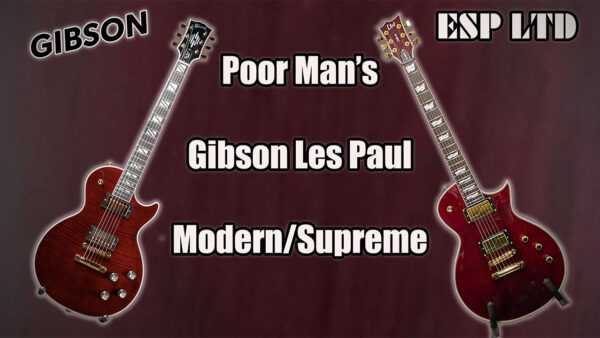
Epiphone just brought back the Prophecy series, and I bought the new Les Paul the day it came out. Not the baritone, not the whole lineup. Just the regular Les Paul Prophecy in Crimson Fog Satin, because that’s the one I’d been waiting for.
I’ll say it up front: I think this is the best Les Paul Epiphone has ever made. Not the best value, and not the most traditional. But if you want a modern Les Paul with modern specs that looks mean and plays great, this is it. Here’s why, plus the few things that bug me.
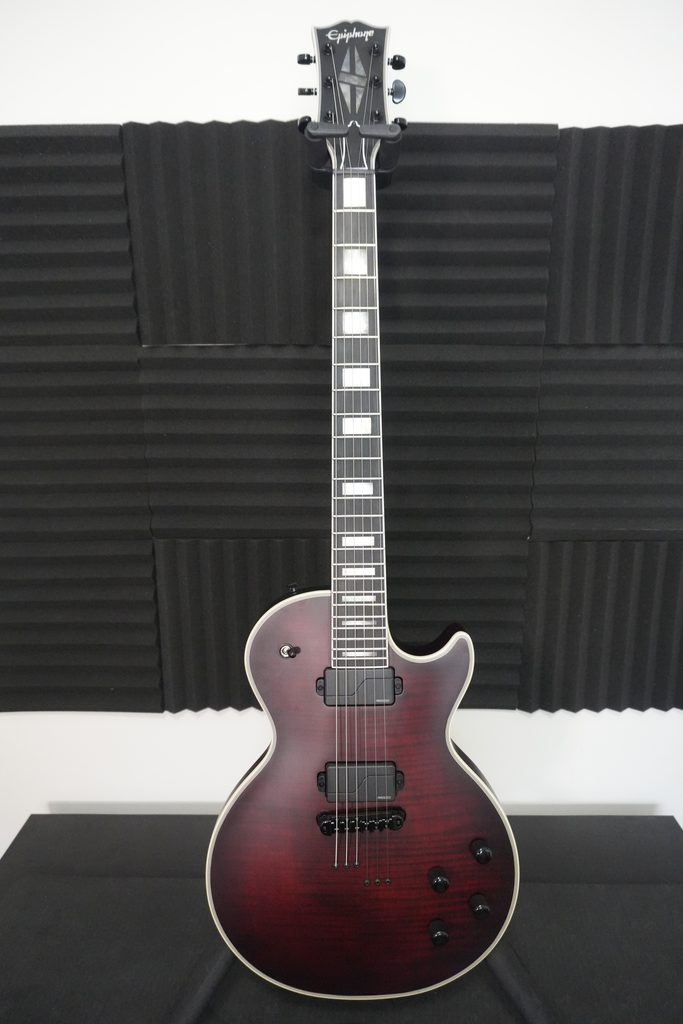
Quick background if you’re new here. I’m not a metal guy and I’m not a shredder. I play punk and alt rock, I mash a lot of power chords, and I like things to sound aggressive. Epiphone is clearly marketing the Prophecy to metal players, so this is the everyday player’s take.
Why I bought it day one
I owned a last gen Les Paul Prophecy, and it was a great guitar. But it had the old Epiphone Kalamazoo headstock, and I always said if they ever put a Gibson style open book headstock on a Prophecy, I’d buy it day one. So here we are.
I’m also a sucker for modern guitars. I love the LTD EC-1000 lineup, and I own a few modern Epiphones to compare this to: the Les Paul Custom Modern, a Futura Les Paul Custom, and an Inspired by Gibson Custom Les Paul Custom. So I’m not calling the Prophecy the best just because it’s the newest thing in my house. I’m calling it that because it earned it.
Epiphone Les Paul Futura
Epiphone Les Paul Custom Modern
Epiphone Les Paul Custom Cobra Burst
ESP LTD EC-1000 Granite Sparkle
Price, colors and the case
The Prophecy Les Paul is $1,499 (as of October 2026). It comes in three finishes: Crimson Fog Satin like mine, Obsidian Storm Satin, and Forest Phantom Satin.
I know what a lot of people are thinking. $1,499 for a China made Epiphone? But it’s 2026, and guitar making has come a long way. Epiphone’s factory in China is also owned by Gibson, so this isn’t some random factory cranking these out. And in my experience, quality has gotten a lot better since Epiphone moved to the Inspired by Gibson lineup.
You also get a real case. It comes with Epiphone’s Protector Ultralite case, and some people are upset it’s not a hardshell. I think it’s a win. An LTD EC-1000 at about the same price doesn’t come with a case at all. Compared to the gig bag on my Futura, it’s leagues better, and honestly it feels almost as protective as the hardshell that came with my Inspired by Gibson Custom. My last gen Prophecy didn’t come with a case either.
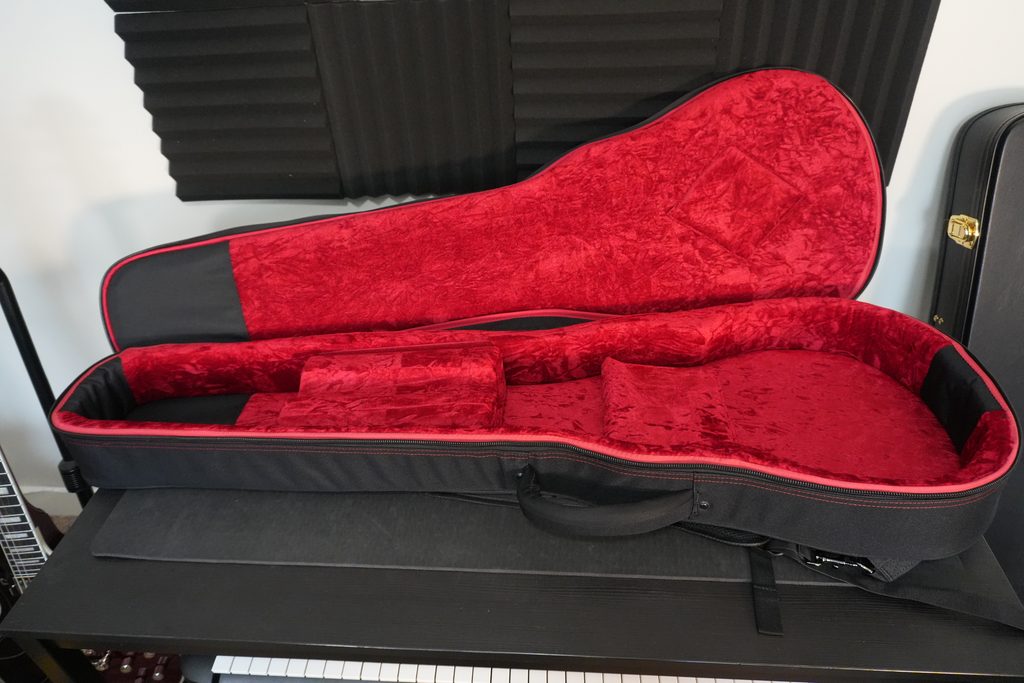
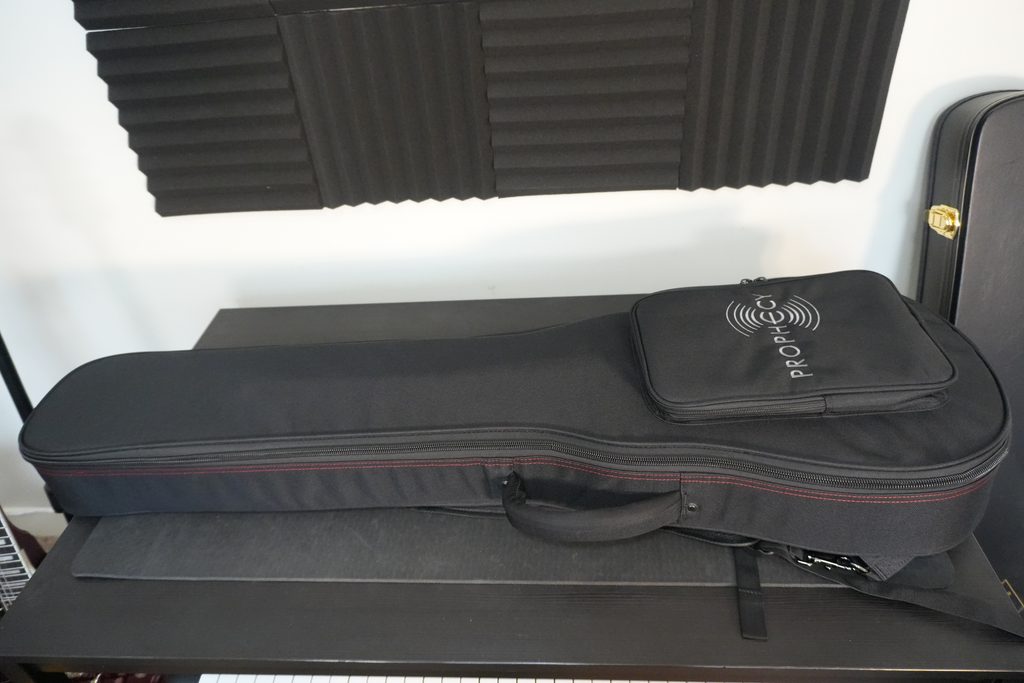
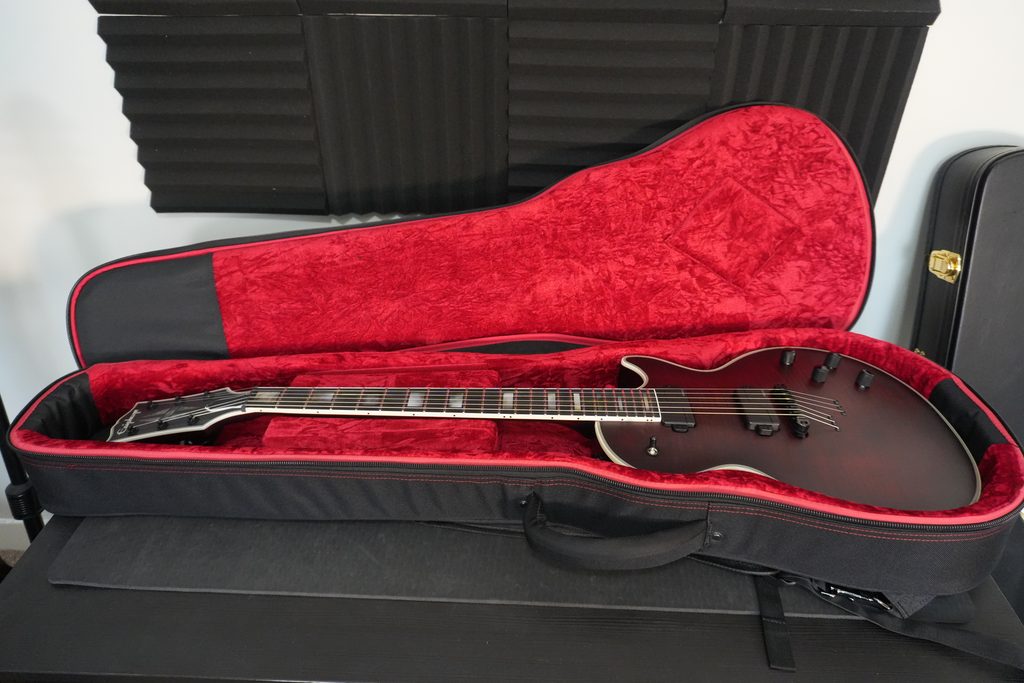
My one gripe right out of the box is the satin finish. I buy and sell guitars a lot, and satin can shine up over time from the oils in your hands. But I’m a sucker for a dark red Les Paul, so I’m letting it slide.
The specs that actually matter
I don’t want to read you a spec sheet, but here’s the quick version, then what each one means if you’re a regular player like me.
| Spec | 2026 Les Paul Prophecy |
|---|---|
| Price | $1,499 (as of October 2026) |
| Body | Weight relieved mahogany, maple cap, flame maple veneer, satin finish |
| Neck | One piece thermally aged maple, graphite reinforced, HyperGlide profile, volute |
| Scale length | 25.5″ |
| Fretboard | Ebony, 10″ to 14″ compound radius |
| Frets | 24 stainless steel, rounded ends |
| Pickups | Custom voiced Fishman Fluence actives (9V battery) |
| Controls | 2 volume (pull for coil split), 2 tone (pull for vintage voice) |
| Bridge | LockTone Modern with roller saddles, string through body |
| Tuners and nut | Grover locking tuners, Graph Tech nut |
| Headstock | Gibson style open book |
| Case | Protector Ultralite |
| Weight (mine) | About 8.5 lbs |
Longer scale. A normal Les Paul is 24.75″. This one is 25.5″, the same as a Strat. Longer scale means tighter strings, so drop tunings stay firm instead of floppy. If you play in standard, bends feel a little stiffer at first, but you’ll stop noticing pretty quick.
The neck. Epiphone calls the shape HyperGlide. It’s a slim D, and with my smaller hands, that’s a big plus. There’s also a volute, the little bump where the neck meets the headstock. That adds strength right where Les Paul headstocks are known to snap.
Fretboard and frets. The compound radius is rounder near the nut for chords and flatter up high for bends. And it has 24 stainless steel frets instead of the usual 22, with rounded ends. I’m a big fan of stainless. Bends feel smoother, and they last way longer than nickel.
Pickups. These are Fishman Fluence actives voiced just for this series. Knobs down, you get the modern high output voice. Pull a tone knob and you get a vintage PAF style voice. Pull a volume knob and it splits the coil. They do run on a 9V battery, so keep a spare around.
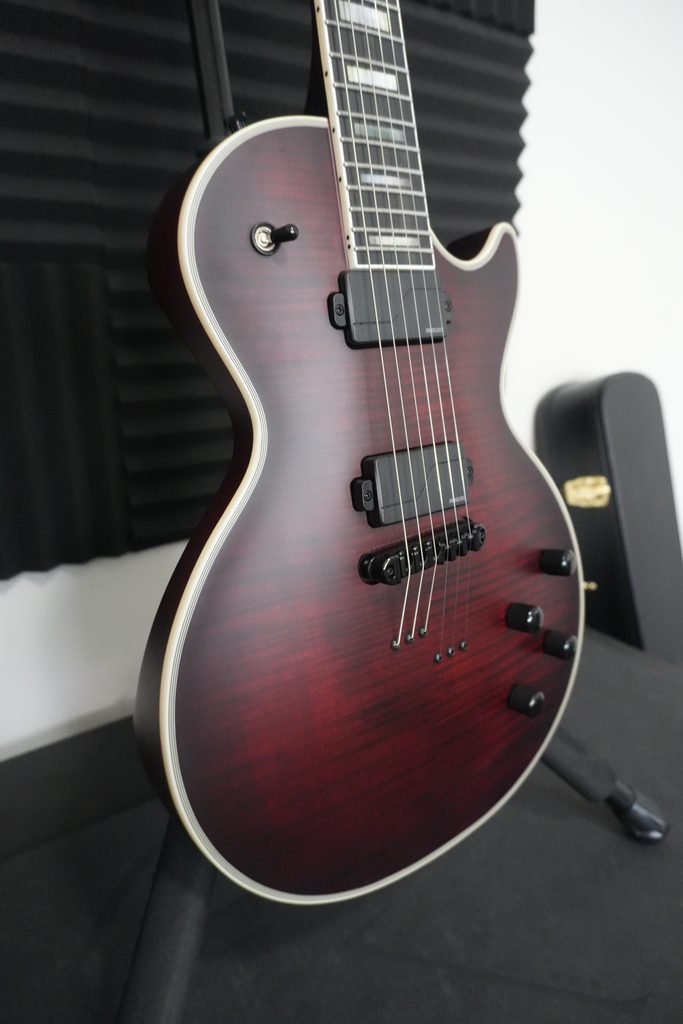
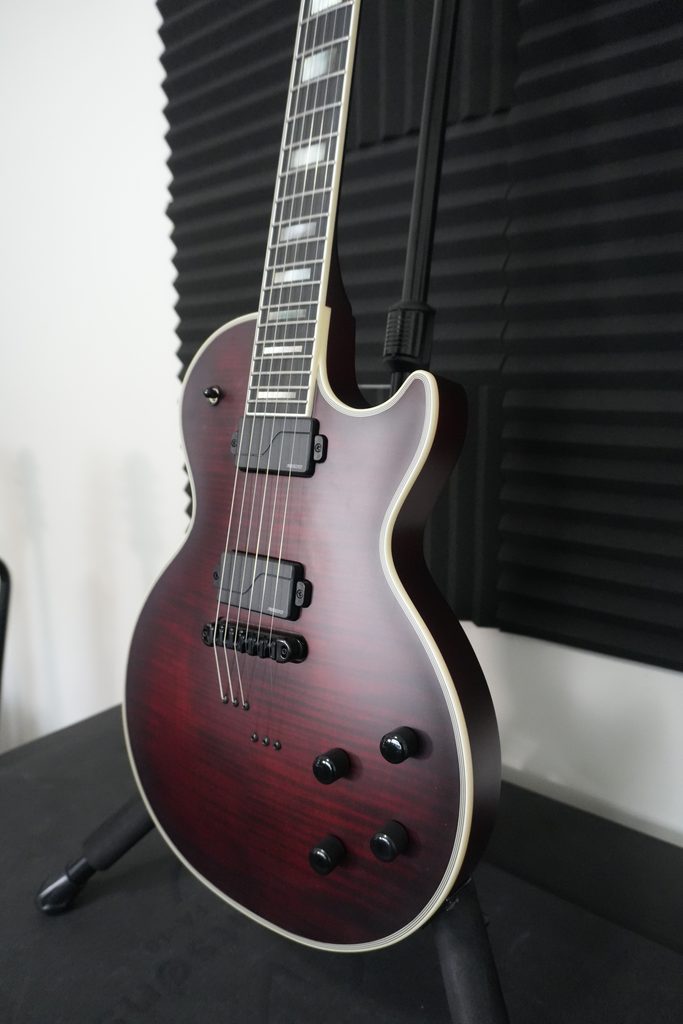
Pickup mounting. This one’s new. A normal Les Paul has its pickups sitting in plastic rings. These don’t have any. Epiphone came up with a system called DAPS that anchors each pickup into a pocket in the body with little stabilizing wings. You can still adjust the height. I’m still a little on the fence about the look, but it does give it a more aggressive, modern vibe.
Bridge. The new LockTone Modern bridge has roller saddles for smoother tuning and less string breakage. It locks to the body, so it doesn’t fall off when you change strings, and it sits low in a rounded housing, so nothing digs into your hand when you palm mute. The strings go through the body, with the bass strings anchored closer to the bridge than the trebles. That tightens up the low end while keeping bends a little slinkier.
Everything else. Locking Grovers, a Graph Tech nut, a weight relieved body with a belly cut, and a contoured heel so you can actually reach the top frets when you’re pretending to be a shred legend.
Fit, finish and setup out of the box
Honestly, this is one of the best Epiphones I’ve received. I say that a lot lately, but it’s true here.
- Frets: No sharp ends, and I love the rounded edges on the stainless frets. No major tool marks like I’ve gotten on some guitars in the past.
- Nut: Seated nicely. Usually one side runs over a little on an Epiphone, but this one sits right.
- Nitpicks: A few of the fret markers sit a little off, and there’s some stain that bled onto the binding. Neither is a big deal.
I know a lot of people tear a new guitar down right away, restring it, and give it a full setup. Most people don’t, so I like to judge a guitar exactly how it shows up. This one came set up well, with no fret buzz. The action could go a tiny bit lower for my taste, but that’s personal preference.
It weighs about 8.5 lbs, almost exactly the same as my Gibson Les Paul Modern Figured at 8.4. It balances well on a strap with no real neck dive.
How it sounds
The sound demo in the video is about three minutes of me just playing, all in the default modern voice, through the neck, middle, and bridge positions. It’s tight and punchy, even with the gain up, and it handles power chords great. You don’t need to play metal to enjoy this thing.
The (accidental) drop test
Yes, I dropped it on camera. It held up just fine. I probably shouldn’t admit that, but between the reinforced neck and that volute, it did its job.
Who should buy it
If you tune down, play heavy, or just want the most modern Les Paul Epiphone makes, this is an easy pick.
But I don’t want to pigeonhole it. Even if you play in standard and mostly mash power chords like me, the neck, the frets, and the bridge make it really fun and easy to play.
Who should skip it? If you want a traditional Les Paul feel and sound, the longer scale and active pickups make this a different animal. And if $1,499 is too much right now, the Futura line is a killer deal, or you can wait and grab a Prophecy used down the road.
Is it the best Epiphone Les Paul?
I think so, because it’s doing its own thing. It’s not a cheap copy of a Gibson. Gibson does make a Les Paul Custom Long Scale with the same 25.5″ scale, but it’s almost $6,000 and still has a regular Tune-O-Matic and passive pickups. $6,000 or $1,499. You do the math.
So if you want a Les Paul with modern specs that plays great and looks mean, this is the best Epiphone Les Paul, period.
Sources
- Gibson, Epiphone Prophecy Les Paul product page
- Premier Guitar, Epiphone unveils redesigned Prophecy series
- Epiphone press release via MusicPlayers, Prophecy series launch
- Gibson Gazette, Gibson Les Paul Custom Long Scale announcement
- Guitar World, Les Paul Custom Long Scale pricing