
Buying Your First Electric Guitar Without Overthinking It
By Nick Neumann - 2/01/2026
When I was a teenager, I played guitar for a bit and owned a couple of cheap guitars. I did not really know what was good or bad. I just recognized brand names I had heard people talk about over the years.
Then life happened, and guitar disappeared for a long time.
When I eventually picked it back up years later, I realized I had no idea how to buy a guitar properly. I knew names like Fender, Gibson, and Ibanez, but I did not understand why people liked them, what actually mattered for playability, or why some guitars felt great while others did not.
I ended up buying and trading a lot of guitars trying to figure that out. I wasted money trading gear instead of selling it myself, chased specs that did not really matter to me, and slowly learned which guitars actually fit my style and which ones did not.
Whether you are buying your first electric guitar or you are stuck wondering why nothing you play feels quite right, my goal here is to help you make a confident choice without overthinking it or wasting money along the way.
About the Video Version of This Guide
This article is based on a video I recorded covering the fundamentals of buying your first electric guitar. The video focuses on the core ideas, while this article expands on them with additional detail, broader brand coverage, and a few extra considerations that are easier to explain in writing.
If you prefer watching instead of reading, the video works well as a companion to this guide.
Scope of This Guide
This guide focuses specifically on electric guitars. They introduce extra variables like pickups, amps, and electronics that are worth covering on their own. If you are shopping for an acoustic guitar instead, I have a separate guide for that.
You may also notice that this guide avoids deep dives into tonewoods, fingerboard materials, and construction details. Those factors can matter, but they tend to become personal preferences as you gain experience and open up a rabbit hole that is not especially helpful when choosing a first guitar.
How Much Money Do You Actually Need?
A realistic starting point for most beginners is about two hundred to four hundred dollars total for a guitar and a small amp.
Because you also need an amp, a cable, and a tuner, the practical guitar-only budget usually lands closer to the upper end of that range. With recent price increases it may push slightly higher.
You do not need the best guitar in the store. You need one that stays in tune, feels comfortable, and makes you want to pick it up.
How to Narrow Down Your Options
If you feel overwhelmed by choices, one of the easiest ways to narrow things down is to look at the artists you already like and see what they play.
You do not need the exact same guitar they use. In most cases, guitar companies offer similar models across different price ranges. The entry-level versions will not have the same materials or hardware, but the overall layout and feel are often similar.
As guitars get more expensive, the differences usually come down to upgraded components. Better pickups, improved tuning machines, higher-quality electronics, and more attention to finishing details all add cost. That does not mean cheaper guitars are bad. It just means they are built to hit a price point.
If you are just starting out, comfort and playability matter far more than specs. You can always upgrade later once you know what you actually like.
One thing worth mentioning is brand and model elitism. Even if a beginner guitar plays great, some people will still judge it based on the name on the headstock. Do not let that discourage you. The guitar you actually play is always better than the one you do not.
Major Electric Guitar Brands and Why They Matter
There are dozens of electric guitar brands, but a smaller group dominates the market because they have been around for decades, are widely available, and offer clear upgrade paths as you improve.
Fender
Fender helped define what an electric guitar is. The Stratocaster and Telecaster became templates that countless other guitars are based on.
Things Fender is generally known for:
- Brighter, clearer tones
- Neck shapes that feel familiar and comfortable
- A massive new and used market
- Easy upgrade paths within the same brand
Fender’s entry-level guitars are sold under the Squier name, which is where many beginners start. Fender also owns Jackson and Charvel, which tend to focus more on modern rock and metal styles.
Like most major companies, Fender operates on a ladder. There are affordable entry models, mid-range workhorse guitars, and higher-end American-made instruments. Even within Fender-branded guitars, there are lower-priced and higher-priced tiers.
Gibson
Gibson is closely associated with the thick, powerful humbucker sound that shaped rock music. Models like the Les Paul and SG are iconic for a reason.
Gibson guitars are typically associated with:
- A shorter scale length that can feel easier to play
- Warmer, thicker tones
- Strong resale value
Gibson’s entry and mid-level guitars are sold under the Epiphone name. Like Fender, Gibson offers everything from affordable entry-level instruments to high-end professional models.
Ibanez
Ibanez became especially popular by focusing on modern playability. Slim necks, versatile electronics, and player-focused designs are a big part of their identity.
Ibanez is often known for:
- Thinner, faster neck profiles
- Strong value at lower and mid price points
- Heavy presence in rock and metal styles
Ibanez guitars range from affordable entry-level models to higher-end instruments, but the same general design philosophy runs through the lineup.
PRS
PRS built a reputation for consistency and attention to detail. Many players see PRS as a versatile option that can cover a lot of ground.
PRS guitars are commonly associated with:
- Very consistent quality across price ranges
- Pickup configurations that work for many styles
- SE models that offer approachable entry points
ESP and LTD
ESP is best known for guitars aimed at hard rock and metal players. While ESP’s higher-end instruments are targeted at professionals, LTD serves as the more affordable and mid-range option.
ESP and LTD guitars are often associated with:
• Heavier styles of music
• Modern neck shapes and pickup designs
• Strong value, especially in mid-priced models
Every Brand Has Entry-Level and High-End Guitars
Almost every major guitar brand works the same way. They all offer entry-level guitars, mid-range models, and higher-end instruments. The differences usually come down to hardware quality, consistency, and finishing details. Entry-level doesn't mean they are bad guitars and nowadays entry level guitars are far superior then guitars even built 20 years ago.
Where Electric Guitars Are Made and Why It Matters Less Than It Used To
Years ago, where a guitar was made could tell you a lot about its quality. Today, modern manufacturing and better quality control mean even lower-priced guitars are far better than beginner instruments used to be.
That said, players still associate certain countries with higher build quality, and that perception did not come from nowhere.
Many people tend to think about build quality like this:
- United States guitars carry long-standing prestige and higher prices
- Japanese guitars are known for consistency and attention to detail
- Korean guitars have improved massively and are often great values
- Mexican guitars are closely tied to major US brands and tend to be reliable
- Indonesian and Chinese guitars vary by factory but are much better than their reputation suggests
Two guitars made in the same country can feel completely different. At beginner price points, brand oversight and setup matter far more than the country stamped on the headstock.
Pickup Configurations Explained Simply
Pickups are what turn your guitar’s string vibrations into an electrical signal that your amp can amplify. The type of pickups on a guitar affects how it sounds, but they do not define what you can or cannot play.
Most beginner electric guitars fall into one of three pickup configurations.
Single-coil pickups (often written as SSS)
Single-coils are known for their clear, bright sound and are often associated with clean tones, blues, funk, and classic rock.
Dual humbuckers (HH)
Humbuckers sound thicker and more powerful and handle distortion well, which is why they are often associated with rock and heavier styles.
Humbucker with two single-coils (HSS)
Some guitars combine both, usually a humbucker near the bridge and single-coils in the middle and neck positions. This setup is designed to cover a wide range of sounds in one guitar.
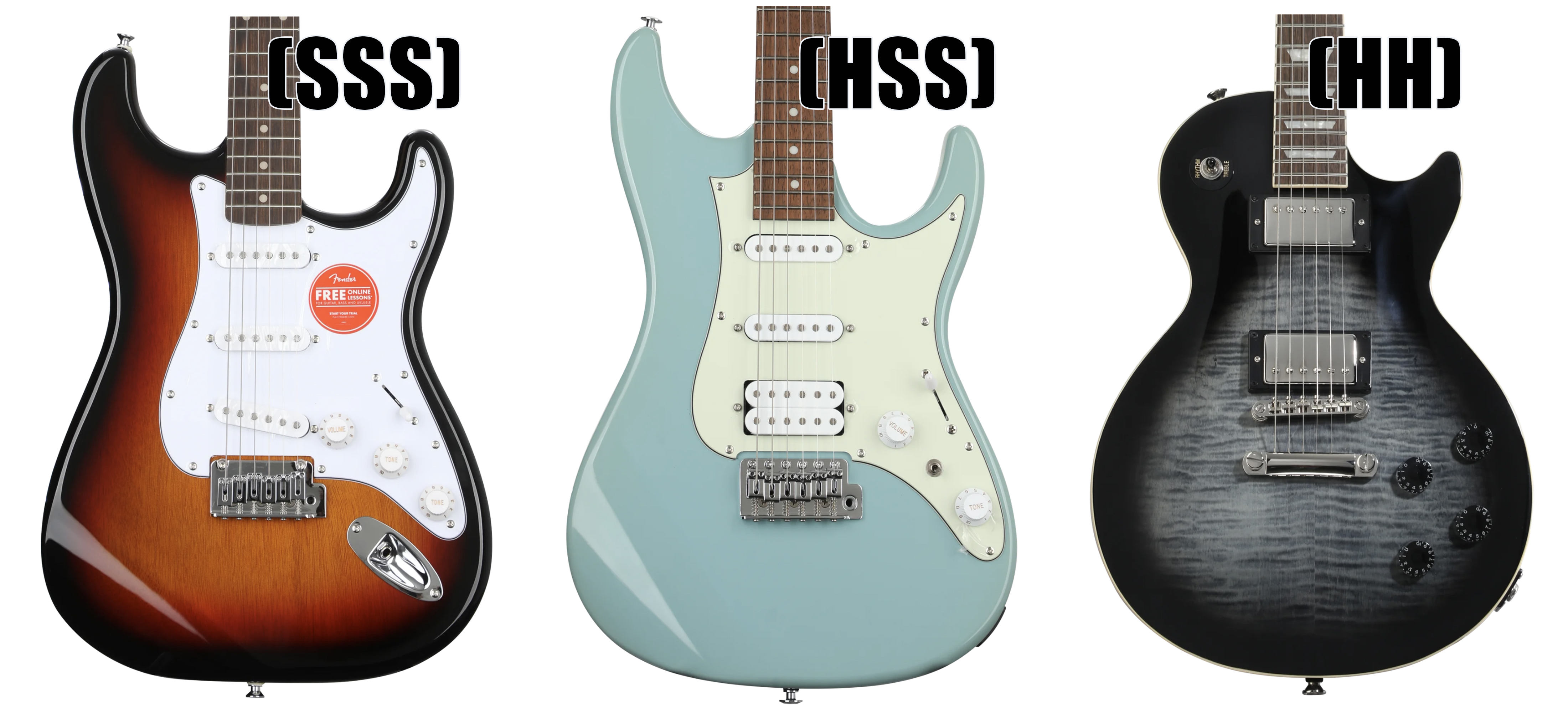
Very broadly speaking, single-coils are often linked to cleaner tones and humbuckers to heavier tones. However, modern amps and effects have made all of these pickup types far more versatile than people realize.
Many players use single-coil guitars for heavy music and humbuckers for clean tones. Early on, your amp, settings, and playing style will shape your sound far more than the pickups themselves.
All of these options are capable of covering a wide range of music and are more flexible than they may appear on paper.
Neck Shape and Feel
One of the most important factors in how a guitar feels is the neck, and it is also one of the hardest things to judge from specs alone.
Neck profile refers to the shape and thickness of the neck as it fits in your hand. Some feel thicker and rounder, others feel slimmer and faster. There is no universally better option. It comes down to what feels comfortable to you. Players with larger hands sometimes prefer thicker necks while others gravitate toward slimmer profiles. Neither choice affects skill level or limits what you can play.
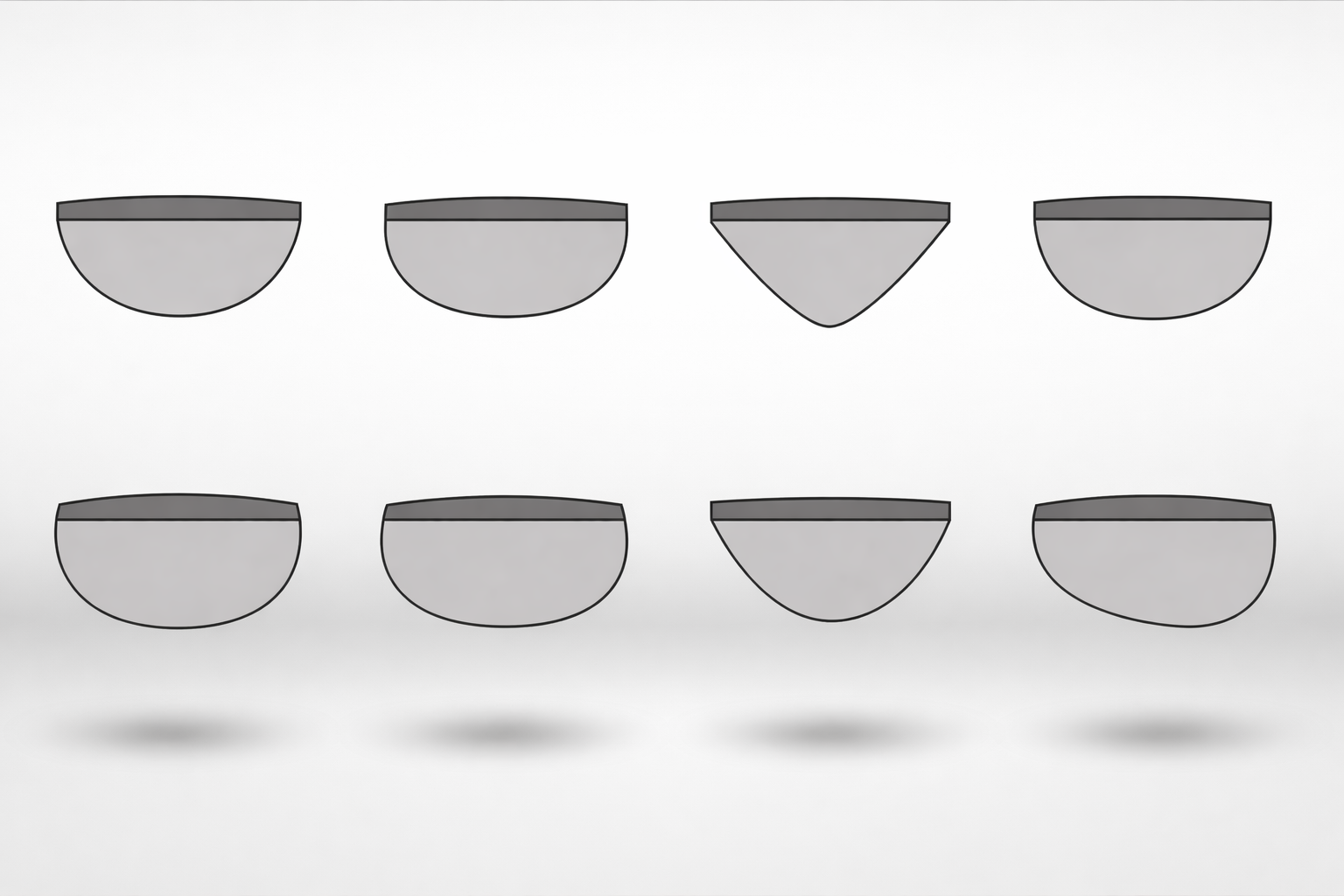
Fretboard radius is a separate but related concept. It describes how curved the fretboard is from edge to edge.
A smaller radius (more curved) can feel comfortable for chords and general playing. A flatter radius can make string bending and lead playing feel a bit easier. For example, a 9.5-inch radius will feel more curved than a 12-inch radius.
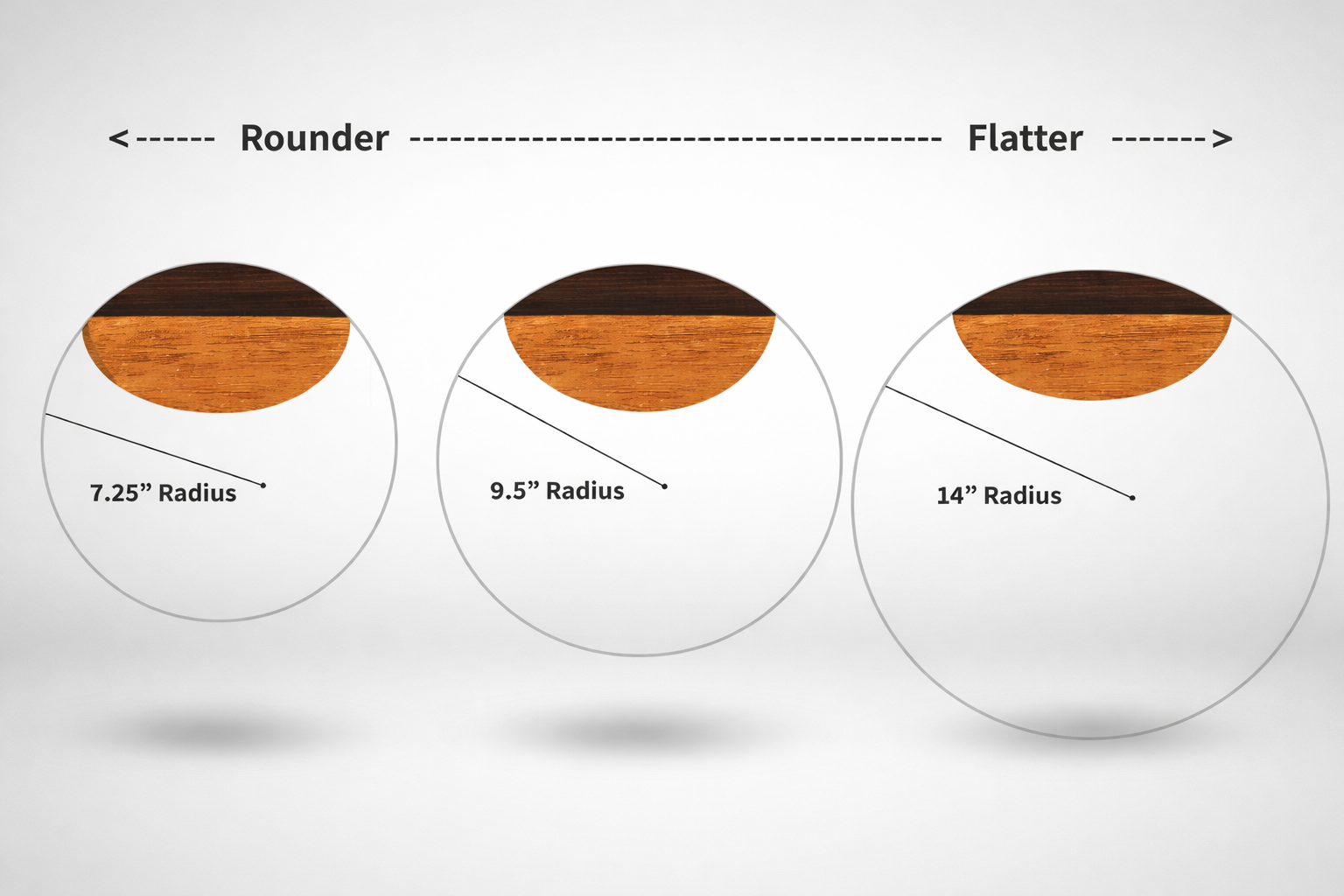
These differences are subtle, especially for beginners, but they become more noticeable the longer you play. This is one of the biggest reasons that holding a guitar in person can be so helpful. Two guitars with similar specs can feel very different once they are in your hands.
If a guitar feels comfortable and natural when you hold it, that matters far more than the exact numbers on a spec sheet.
Why Playing Guitars in Person Matters
If you have the option to visit a local guitar shop, it is one of the most helpful things you can do before buying your first guitar.
If you are brand new, you do not need to know how to play. Simply holding the guitar is enough. Pay attention to how it sits against your body, how the neck feels in your hand, and whether it feels comfortable or awkward. Those impressions matter more than you might expect.
A good guitar salesperson will understand this and help guide you toward something in the right price range without pressure. If someone immediately tries to push you toward a very expensive guitar for your first purchase, that is a red flag.
Even if you ultimately plan to buy used or online, spending time in a store gives you a valuable reference point. It helps you understand what you actually like instead of guessing.
Popular Electric Guitars by Price Tier
There are countless great guitars on the market. The examples below are not the only good options. They are simply models I would personally consider based on my preferences. Yours will most likely vary, but it's a good starting point.
Entry Level: $200 - 400
This range assumes you still need to budget separately for an amp and basic accessories.
Expect basic hardware and fewer refinements. Even though guitars are built better than ever, you should not expect a guitar in this range to arrive perfectly set up.
Examples include:
-
Squier Affinity Stratocaster
A very flexible Strat style guitar that works across many styles. The necks are generally comfortable, the body shape is familiar, and there is a massive new and used market if you ever want to upgrade or resell.
-
Epiphone Les Paul Special
A stripped-down take on the Les Paul shape that keeps things simple. It is lightweight, easy to handle, and a good option if you prefer humbuckers and a no-frills layout.
-
Ibanez Gio series
Often chosen for their slimmer neck profiles and modern feel. These are a good choice if you are drawn to faster necks or lean toward rock and heavier styles.
-
ESP LTD EC-10
A basic single-cut design aimed at rock and metal players. Simple controls and humbuckers make it easy to plug in and focus on playing.
These are great starting points to get you playing without being overwhelmed.
Mid Range: $500 - $1000
This is where quality jumps noticeably.
Guitars in this tier tend to stay in tune better, feel smoother in the hands, and remain satisfying for much longer before upgrade thoughts start creeping in. For many players, this range offers the best balance of price and long-term value.
Examples include:
-
Fender Player II Series
A modern take on Fender’s classic designs with improved consistency and playability. A strong option if you like familiar Strat or Tele ergonomics but want something more refined.
-
Epiphone Les Paul Standard
Often found used at very reasonable prices, these offer the classic Les Paul feel with better hardware and construction than entry-level models.
-
Ibanez RG Series
Built with modern players in mind. Slim necks, flatter fretboards, and versatile pickup options make these popular for rock and metal styles.
-
PRS SE Custom 24
Known for consistent quality across price points. Comfortable necks and balanced tones make this a versatile choice for many players.
-
ESP LTD EC-256
A strong value, especially on the used market. Solid construction and a comfortable neck make this a reliable option for heavier styles.
This tier is often where the guitar stops getting in your way and starts encouraging longer, more enjoyable playing sessions.
Upper Mid Range: $1000 - $2000
At this point, refinement starts to replace necessity.
Guitars in this range are fully capable of professional studio and live use. They tend to be more consistent from instrument to instrument, stay in tune better, and feel more refined in small but noticeable ways.
Examples include:
-
Fender American Professional II
An evolution of Fender’s classic designs with upgraded neck profiles, electronics, and overall consistency.
-
Gibson Les Paul Studio
Classic Les Paul tone and feel without the cosmetic extras. Built for players who care more about sound and playability than appearance.
-
PRS S2 series
Well-built guitars that focus on consistency and feel. A good option if you want something premium without moving into flagship pricing.
-
Ibanez Prestige models
Known for precision, playability, and consistency. Often favored by players who value fast necks and clean workmanship.
-
ESP LTD EC-1000 series
A popular choice for players who want professional features like upgraded pickups and hardware at a more accessible price.
This tier is often where many players find the best balance between quality, consistency, and long-term satisfaction. These guitars are built to be reliable tools, not stepping stones.
As you move toward the top of this range, improvements become more subtle. The guitar may feel a bit smoother, sound slightly more refined, or have nicer finishing details, but it will not suddenly change your playing. This is what people mean when they talk about diminishing returns. You are paying more for refinement and consistency, not a dramatic leap in performance.
For many players, this is where upgrades slow down or stop, simply because the guitar already does everything they need it to do.
High-End Guitars and a Reality Check
High-end guitars sit above the upper mid-range and represent premium production models from major brands.
Examples include:
- Fender American Ultra II
- Gibson Les Paul Standard
- PRS Core models
- High-end Ibanez Prestige models
- ESP E-II Series
These guitars are typically built with higher-end materials, more detailed finishing work, and tighter quality control. For players who care deeply about feel, aesthetics, or specific features, they can be incredibly rewarding instruments to own and play.
High-end guitars are not about necessity. They are about preference, priorities, and how much value you personally place on refinement, feel, and craftsmanship. The improvements at this level tend to be subtle rather than dramatic, but they matter to players who are sensitive to those details.
It is also worth noting that this is not the top of the guitar world. Most major brands offer Custom Shop instruments above this level, and prices can easily exceed $4,000 and beyond. These guitars are often built in the United States by highly skilled luthiers and are aimed at players who want something truly specific or personalized.
Premium Features You May See as Prices Increase
As guitars move up in price, you may encounter features like locking tuners, stainless steel frets, upgraded electronics, or higher-end hardware.
These features can improve durability or convenience, but they are not requirements for learning or making music. Consider them refinements, not must-haves.
Setup Matters More Than Most People Realize
There is nothing that will kill motivation faster than an improperly set up guitar.
Even though guitars are built better than ever, do not expect a guitar in the two hundred to four hundred dollar range, and often well beyond that, to arrive perfectly set up. A setup refers to basic adjustments that affect how the guitar feels and plays.
One of the biggest factors is string height, often called action. If the action is too high the strings are harder to press down, your fingers hurt quickly, and learning feels way harder than it needs to be. Many beginners think they just need stronger fingers when in reality the guitar itself is fighting them.
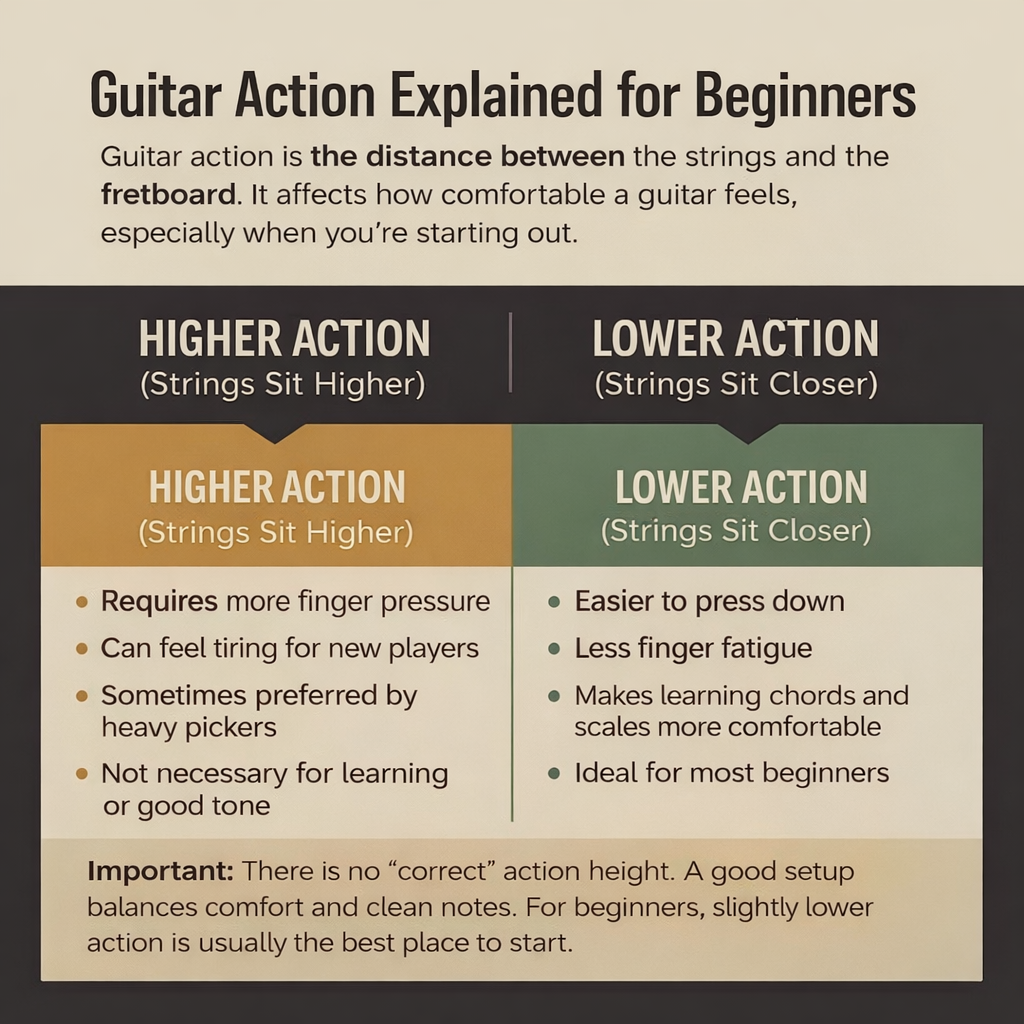
On the other hand, if the action is too low, you may run into fret buzz. This happens when a string vibrates against a fret as it rings out, creating a buzzing sound. A small amount of fret buzz can be normal, especially when playing unplugged. However, if you can clearly hear it through your amp, or if notes do not ring out cleanly, that is a problem.
Another part of a setup is intonation, which affects whether the guitar plays in tune up and down the neck. A guitar can be perfectly in tune when you strum open strings, but sound out of tune when you play higher notes if the intonation is off.
You should also pay attention to fret edges. Run your hand lightly along the edge of the neck. If you feel sharp edges sticking out, that can be uncomfortable and even painful to play over time. Sharp fret ends are more common on cheaper guitars or guitars that have been sitting in dry environments.
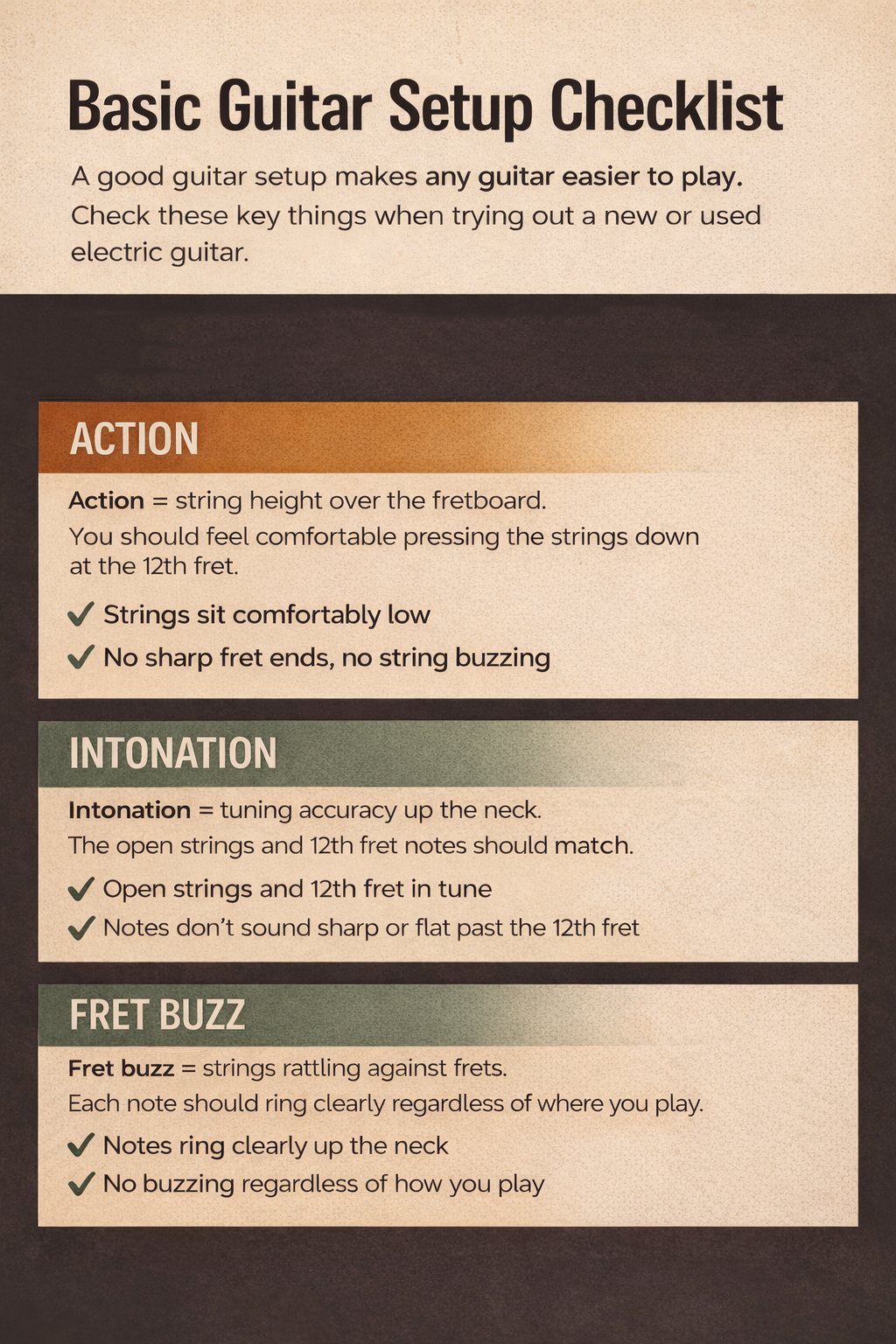
Over time, many players learn to make small adjustments themselves. For a first guitar, having a professional do a basic setup is worth it. That will usually run you around forty to eighty dollars.
Buying Used and What to Watch Out For
Buying used can stretch your budget and is one of the easiest ways to get more guitar for your money.
One of the biggest advantages of buying used is that it can move you into a higher tier of guitar for much less. A guitar that originally sat in a higher price range may now fall into what you would normally consider a mid-range budget.
That said, you need to be careful. Entry level guitars are rarely faked. Once you move into the thousand dollar range and above, caution matters more.
Cheap prices on higher-end guitars can also be due to damage or repairs. Headstock repairs are a common example. These guitars can play fine, but they are often not ideal for beginners.
One of the easiest ways to protect yourself is to compare real market prices. Sites like Reverb make this simple because they include sold listings and price history, which show what guitars are actually selling for instead of just what people are asking.
Most of the links in this guide go to Reverb for that reason. It is one of the largest guitar marketplaces and is widely used by individual musicians, local shops, and major retailers. Even if you are not ready to buy yet, it is a helpful place to understand what a guitar is realistically worth.
If something seems too good to be true, it probably is. Whenever possible, buy from sellers with strong ratings or reputable shops that inspect their gear.
If you upgrade later, selling your guitar yourself usually brings far more money than trading it in. Trade-ins are convenient, but they often return only forty to fifty percent of the guitar’s used market value.
Starter Packs and Online-Only Brands
Starter packs from established brands like Squier and Epiphone can be a workable way to begin, but they come with compromises.
They include everything you need in one box, which is convenient, but the guitar, amp, and accessories are typically the most basic versions available. The guitars themselves are generally playable, but the amps are usually the weak point and can make playing feel less inspiring than it should be.
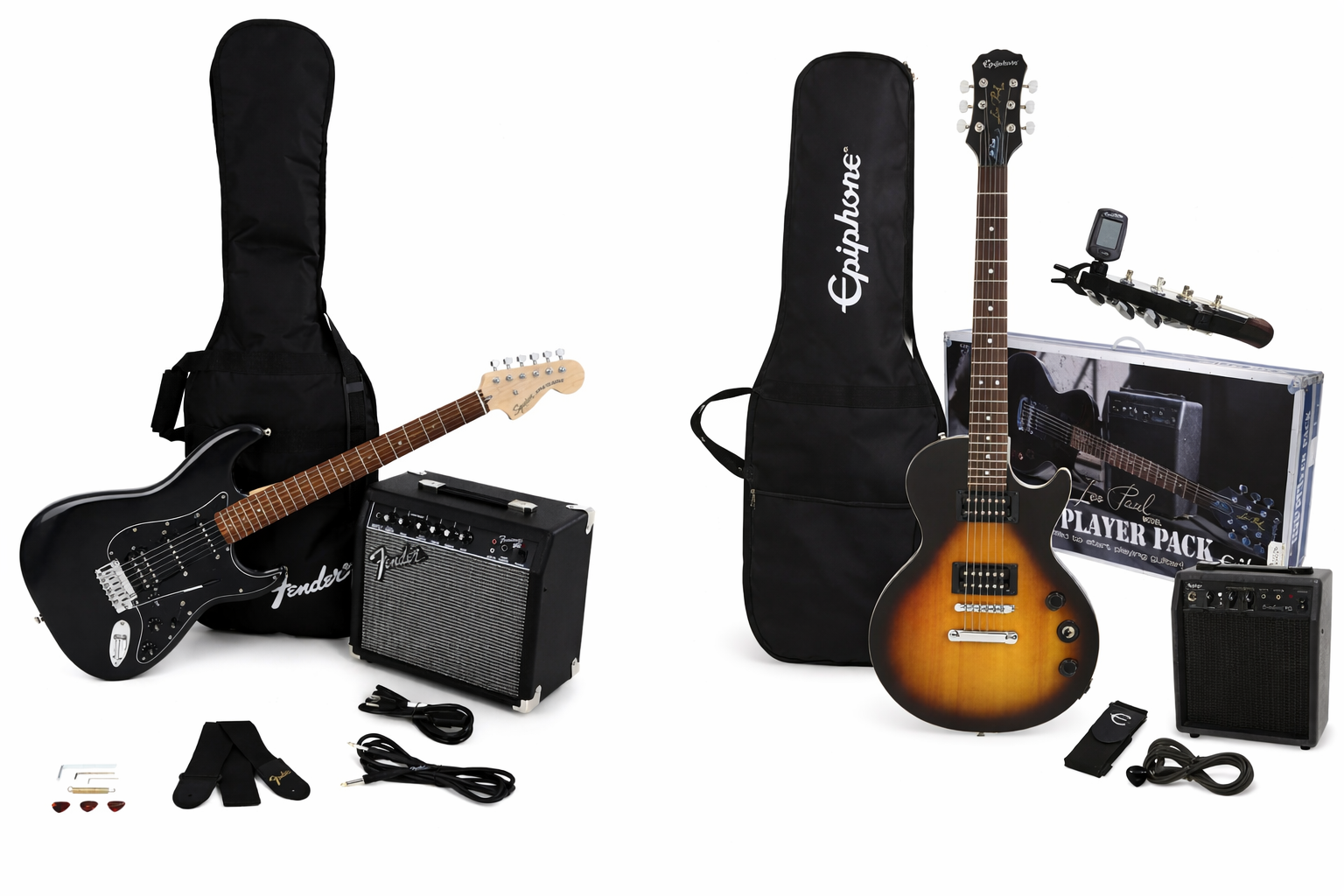
Starter pack examples include:
- Fender Squier Sonic Stratocaster SSS Starter Pack
- Fender Squier Affinity Stratocaster HSS Starter Pack
- Epiphone Les Paul Special HH Starter Pack
Be cautious with brands found almost exclusively on Amazon or eBay that are heavily promoted by YouTubers. These guitars are often heavily modified before filming. Frets may be leveled, nuts adjusted, and full setups performed to make them look and sound better on camera.
For a first guitar, that kind of extra work is not realistic. Even for experienced players, it is usually not desirable.
Established brands are not perfect, but they are far more consistent out of the box and far easier to recommend for beginners.
Electric Guitars Need Amplification
One important thing to understand if you are new to electric guitars is that they are not meant to be played on their own the way an acoustic guitar is.
You can strum an electric guitar unplugged, but it will not sound full or inspiring. To actually hear the guitar properly, you need something to amplify the signal.
The most common option is a guitar amp. Many beginner amps include multiple built-in sounds and effects, which is helpful because you do not need to buy pedals right away. These amps let you experiment with clean tones, distorted sounds, and different styles early on.
Many beginner amps also include headphone jacks, which allow you to practice without disturbing other people around you. This is especially useful if you live with others or practice late at night.
Another option is using an audio interface with a computer. An interface lets you plug your guitar directly into software that simulates amps and effects. This gives you access to a wide range of sounds and lets you play through speakers or headphones. It is a great option if you are interested in recording or quiet practice. This is the option I use, and I personally use a Focusrite Scarlett Interface.
That said, there is something satisfying about plugging into an amp, turning it up, and just playing without worrying about headphones. Both approaches are valid, and many players end up using a mix of both.
Beginner Amp Recommendations
If you are buying your first electric guitar, a small practice amp with multiple built-in sounds is usually the easiest place to start.
Good beginner amp options include:
-
Fender Mustang LT25
A compact practice amp with a wide range of built-in amp styles and effects. Great for experimenting with different tones without buying pedals. -
Line 6 Spider V 20 MKII
A versatile digital modeling combo amp that gives you a lot of tone options in a small package. A great budget choice that lets you hear a wide range of sounds without pedals. -
Boss Katana Mini
A small, portable practice amp with solid tones and a headphone jack. A good option if space is limited.
All of these amps are affordable, widely available, and more than capable of handling practice and learning.
Used Practice Amps If Your Budget Can Stretch
If your budget can stretch a little, or you are open to buying used, you can sometimes find slightly larger practice amps that offer even more flexibility.
For example, I personally own a Line 6 Spider V 30, and it is what I use when I want to play without being tied to an audio interface and computer. It gives you a wide range of amp sounds and effects in one box and is easy to just turn on and play.
Amps in this category are still meant for practice and learning. They are not designed to play loud shows on their own. For everyday playing and experimenting with tones, they can be a great middle ground.
Looking Ahead: Traditional Guitar Amps
As you spend more time around guitar gear, you will eventually hear people talk about tube amps and separate speaker cabinets. These are more traditional guitar amplification systems that many players love for their feel and response.
Tube amps can sound incredible, but they are usually louder, more expensive, and less practical for most beginners. They are best thought of as something you explore later, once you know what tones you enjoy and where you plan to play.
You will also start hearing familiar brand names come up again and again. Fender, Marshall, and Orange are some of the most well-known traditional amp makers. Marshall in particular has long been associated with classic rock guitar tones, while amps like the EVH 5150 are staples in modern rock and metal.
These amps are excellent tools, but they are not required to learn guitar. For home practice and early playing, they are often unnecessary and sometimes more frustrating than helpful due to volume and setup demands.
When the time is right, traditional amps can be a rewarding upgrade. Until then, simpler practice amps and modeling solutions are usually the better choice.
Why Modeling Amps Are Great for Beginners
Many beginner amps fall into a category often called modeling amps. This simply means they include multiple amp styles and effects built into a single unit.
This is extremely useful when you are starting out. You can explore clean tones, crunch, heavier sounds, and time-based effects without buying pedals. It helps you understand what different tones feel like and what styles you enjoy.
Later on, if you decide to invest in pedals or a different amp, you will have a much clearer idea of what you are actually looking for.
A Quick Note on Pedals and Multi-Effects Proccesors
As you spend more time around guitar gear, you will start hearing terms like pedals, pedalboards, and multi-effects processors.
Traditional guitar pedals are individual boxes that do one specific thing, such as distortion, delay, or reverb. Players often chain multiple pedals together on a pedalboard to build different sounds. This works well, but it can get expensive, take up space, and require a lot of tweaking.
A multi-effects processor is designed to replace an entire pedalboard in a single unit. These devices use digital modeling to recreate a wide range of pedals and amps, and they let you save and switch between complete sound setups instantly. This makes changing sounds much easier compared to managing multiple individual pedals.
I personally use the Line 6 Helix LT multi-effects processor if I need to play live. However when I'm recording, I primarily use the Helix plugin through my recording software, which gives me access to the same amps and effects directly inside my recording software.
In live settings, many players who use multi-effects processors run directly into a PA system or full-range powered speaker, rather than using a traditional guitar amp. In these setups, the processor handles the amp and speaker simulation digitally. Multi-effects processors can also be used with guitar amps, depending on how they are configured.
This is a more advanced approach and not something a beginner needs to worry about. Many practice amps already include basic effects that are more than enough to start learning and experimenting.
Final Thoughts
If you are buying your first guitar or just looking for direction, I hope this guide helped. At the beginning, feel matters more than perfection. A guitar does not have to be your forever instrument to be the right one right now.
As you improve and get deeper into playing, your tastes will change and upgrades will start to make sense. That is normal. Just be warned, if you stick with it long enough, you may eventually end up with a room full of guitars. It happens.
Affiliate Disclosure
Some links in this article are affiliate links. If you choose to buy through them, I may earn a small commission at no extra cost to you. I only link to guitars I genuinely think are worth considering, and this helps support the site and future content.