
Published January 21, 2026 · Updated November 20, 2026
If you’re buying your first acoustic guitar, or maybe stepping up to your second, things get confusing fast. You get hit with body shapes, tonewoods, electronics, and massive price swings, usually with zero context. It’s hard to figure out what actually matters.
Let’s be clear. I’m not an acoustic guitar collector with a wall of boutique instruments. What I have done is make my share of buying mistakes, learned from them, and figured out what actually counts for everyday players. This guide is for anyone in the same spot I was in, whether you’re buying your first acoustic, your second, or the one you plan to keep for good.
Acoustic Guitar Body Shapes
Body shape affects comfort, volume, and feel more than many people expect. Different shapes get tied to certain playing styles, but in reality, most acoustic guitars can handle a wide range of music. A dreadnought is not only for strumming, and a smaller body is not only for fingerpicking. Think of these as tendencies, not hard rules.
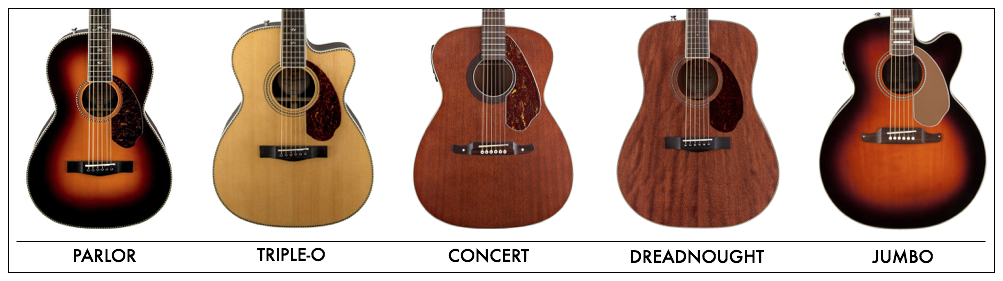
- Dreadnought: Big sound with strong bass and high volume. Popular for strumming, rock, and full chord work. The downside is size. It can feel like a lot of guitar for smaller players, and the big low end can get boomy and crowd your vocals.
- Auditorium / Orchestra: The middle ground. Close to a dreadnought in size but with a narrower waist, so it sits more comfortably and handles mixed playing styles really well. The tradeoff is a little less bass and punch when you dig in hard.
- Concert: Smaller and more focused. Very comfortable for long playing sessions or couch practice, but quieter with less low end, so hard strumming can sound a little thin.
- Jumbo: Very loud and full sounding with big bass, but physically large. Not comfortable for everyone, and it can be a lot to handle sitting down.
- Parlor and Travel: Smaller, more intimate bodies, usually with shorter scale lengths. Great for songwriting, quiet playing, or travel. The catch is volume and bass, and the shorter neck can feel cramped if you have bigger hands.
The most important thing is how the guitar feels in your hands. If it’s uncomfortable, you aren’t going to pick it up and play it.
Cutaway vs Non-Cutaway
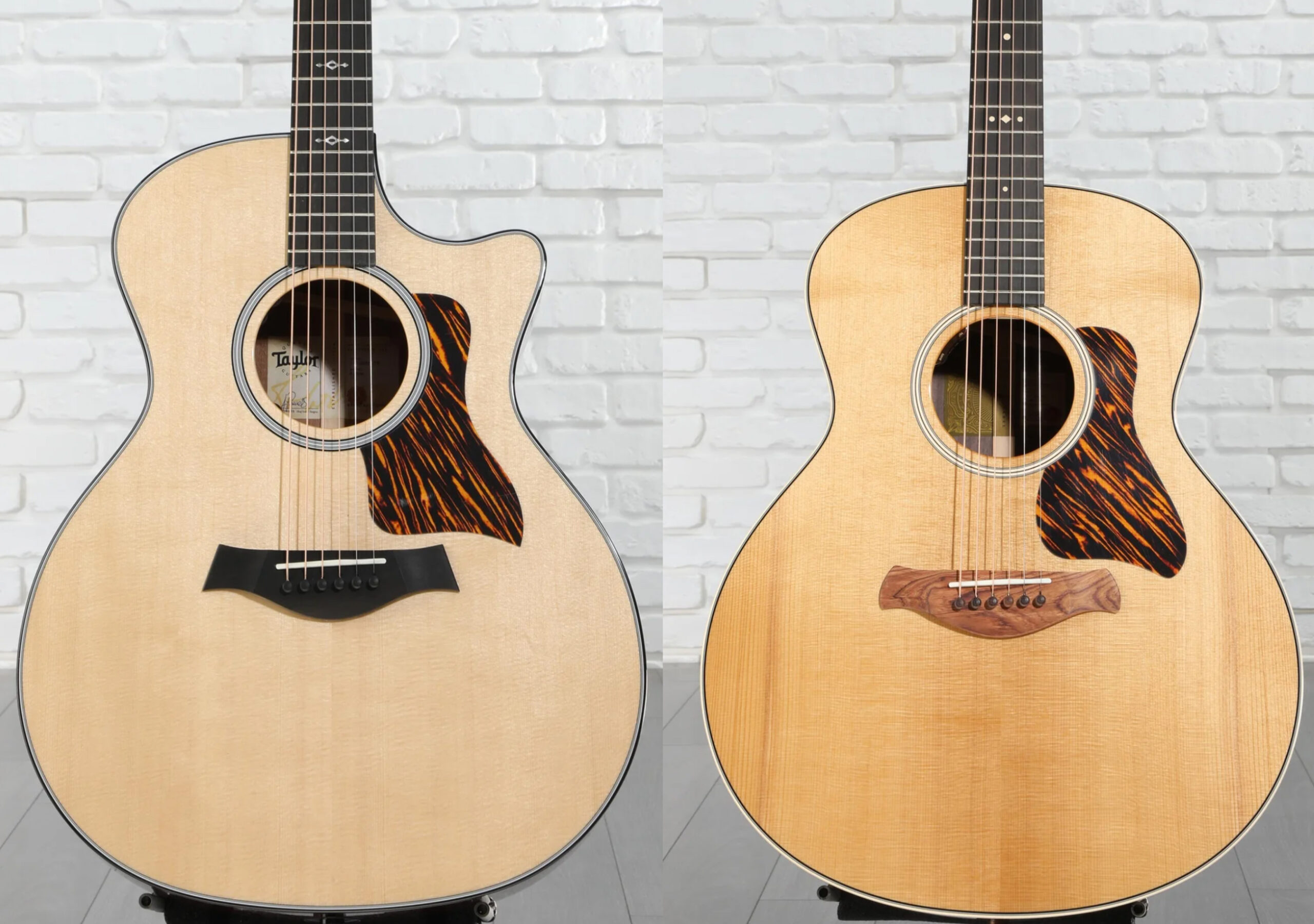
Some acoustic guitars have a cutaway, which is the scooped section near the neck that gives you easier access to the higher frets. That can be really helpful if you play leads or solos, or if you’re coming from an electric guitar background. Some players feel a cutaway takes away a little volume or bass, but in practice the difference is small. If you mostly stay in the lower frets, you may never miss having one. My Paramount doesn’t have one, and it doesn’t bother me.
Acoustic-Electric Guitars and Electronics
An acoustic-electric guitar is still a normal acoustic guitar first. It is designed to be played unplugged, and in everyday use it sounds essentially the same as one without electronics. The electronics do not change the acoustic sound or turn it into an electric guitar. They just give you the option to plug in when you need more volume for live playing, recording, or running through a PA.
Most acoustic-electric guitars start with an under-saddle pickup that captures string vibration. Even when you see a brand name like Fishman listed, this under-saddle pickup (called a piezo) is usually what is doing the heavy lifting. You don’t need to remember the name, just know that it is reliable, common, and handles stage volume well.
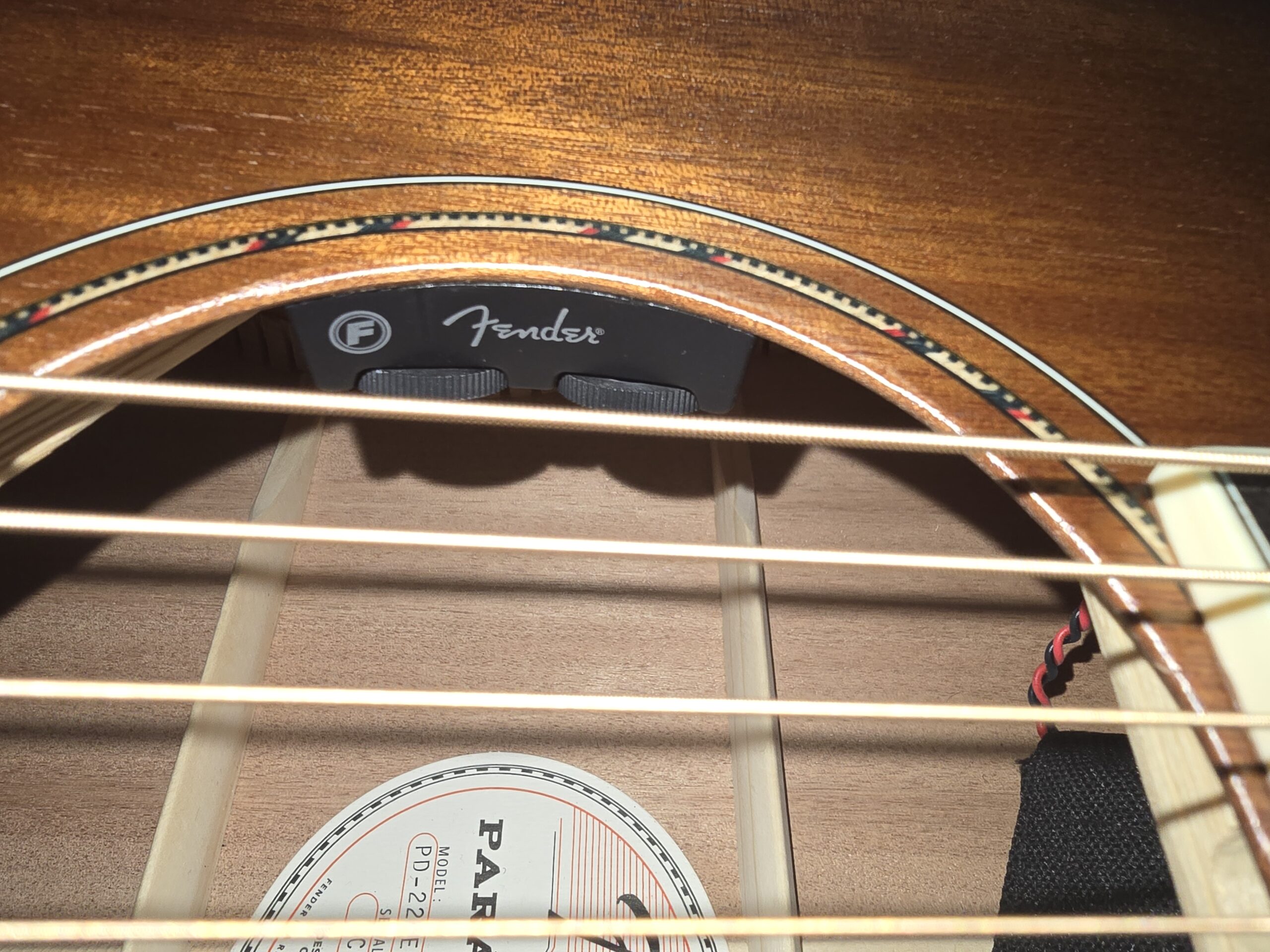
Some guitars stop there with just a volume or tone control. Others pair the piezo with a second sound source, like an internal microphone or a body sensor, and give you a blend control to mix the two. The Fender Paramount 220E series is a good example, using a volume knob and a blend knob to mix the under-saddle pickup with a body sensor. Yamaha’s Atmosfeel system on their Red Label guitars goes a step further by combining a piezo, a contact sensor, and an internal mic.
What a Blend Control Means
A blend knob lets you balance the two sound sources. The piezo side sounds clear, stable, and holds up against feedback on a loud stage. The mic or sensor side sounds more natural and airy, bringing out more of the guitar’s physical body resonance in quieter rooms or recording setups. Most players end up setting it somewhere in the middle.
If a guitar only has a volume control, that isn’t a downside. It just means the system is simpler and easier to use. And if you already own a purely acoustic guitar you love, you can always add an aftermarket pickup system later.
Wood Types and Tone
Tonewoods do affect how an acoustic sounds, but the differences are more subtle than people make them out to be, especially if you are buying your first acoustic guitar.
Common Top Woods
- Spruce: Clear, balanced, and versatile. This is the most common top wood and works well for strumming, flatpicking, and mixed styles.
- Mahogany: Warmer and more focused, often described as punchy or dry sounding.
- Cedar: Very responsive to a lighter touch. Popular with fingerstyle players who prefer a quicker, more sensitive response.
Common Back and Side Woods
- Mahogany: Warm and controlled midrange response.
- Rosewood: Deeper bass with more complex, ringing overtones.
- Sapele / Ovangkol: Popular alternatives chosen for balance, availability, and consistency (sapele gets compared to mahogany a lot).
- Maple: Maple offers a bright, focused tone.
- Walnut: A middle ground between mahogany and maple. You get some warmth, but the highs stay crisp.
Laminate vs All Solid Wood
Laminate means thin layers of wood pressed and glued together, kind of like a really nice plywood. The cheapest guitars use it everywhere, top included, but on most decent guitars it’s just the back and sides.
- The outer layer is a real wood veneer.
- The inner layers are chosen for strength and structural stability.
This makes the guitar more resistant to humidity changes, less likely to crack or warp, and cheaper to produce. Laminate guitars are not fake or bad. They are built with durability and consistency as the priority. (You’ll also see HPL, or High Pressure Laminate, on guitars like the Little Martin, which is about as tough and worry-free as it gets).
A lot of mid-range guitars use a solid top paired with layered back and sides. The general consensus is that the top does most of the work producing sound, so going solid there is the biggest step up. Early on, this is usually the smartest compromise.
An all-solid wood acoustic uses single, solid pieces of wood for the top, back, and sides. Because each piece vibrates as a whole, the guitar resonates more freely and the tone tends to be richer. You’ll also hear players say solid wood guitars open up and sound better as they age.
Solid wood reacts to the air around it. When the air gets dry the wood shrinks, and when it gets humid the wood swells. A solid wood guitar left out in a dry room all winter can crack, which is an expensive repair. Laminate guitars are much more forgiving, which is a big reason they make sense for a first guitar or one that lives out on a stand.
If you buy a solid top or all-solid guitar, keep it in its case when you’re not playing, especially during dry winter months. A simple case humidifier goes a long way. If a guitar is getting too dry, the fret ends will usually start feeling sharp along the edges of the neck, and the strings may start to buzz. It isn’t hard to manage, it just needs to be part of the plan when you step up to solid wood.
You do not need an all-solid wood acoustic to be a real player. But if you know you are serious and want an instrument that grows with you, solid construction is one of the biggest things you pay for as prices go up.
Internal Bracing
Inside every acoustic is a system of wooden braces that support the top and help shape how it vibrates. You will see marketing terms like scalloped, forward shifted, or V-Class on spec sheets. Bracing does play a part in the sound, but it isn’t something you need to sweat when you’re starting out.
A Note on Brands and Identity
This isn’t a brand comparison, but there are some names you’ll see pop up a lot when you’re shopping: Yamaha, Taylor, Martin, Fender, Gibson, Epiphone, and Guild. Those are the ones in this guide. There are plenty more good brands out there. These are just some of the big ones.
You’ll notice a lot of Yamaha in the guide, and that’s on purpose. Yamaha makes very consistent instruments that punch above their price, which makes them easy to recommend for beginners or players stepping up. Over time, many players gravitate toward brands that match their style or the kind of music they play. That doesn’t mean one brand is better than another. Priorities just change.
One thing I’d personally stay away from is brands you only ever see on Amazon or eBay. Quality can be hit or miss, they usually show up with no setup, and they’re hard to resell later.
A Personal Buying Mistake
I bought a Taylor 214e DLX early on because I trusted the brand name more than my own understanding at the time. The guitar played well, but it had more cosmetic wear than I should have accepted for the price. There were small nicks on the top and clear coat wear along the binding. Nothing structural, but enough that I should have negotiated harder. It also came with a softshell case that wasn’t great, and even after I cleaned it up, the padding damage was still there.
When I eventually sold it, I ended up with about $525 after shipping and fees. That stung, but it forced me to slow down and rethink what actually mattered to me. I ended up buying a Fender Paramount for less money, and it came with the original hardshell case. It was all solid wood, fit my style better, and made more sense for how I actually play.
The Taylor was not a bad guitar. I just paid too much because I went all in on the name before I understood construction, condition, and value.
Acoustic Guitar Recommendations by Price
These are not “best guitar ever” picks. They are well known options that make sense depending on where you are as a player, and the body shapes are listed to give you a general idea of size and feel, not to lock you into a playing style.
Prices move around a lot, so treat these ranges as a guide. They are based on what these guitars typically sell for on Reverb as of October 2026, new and used. Buying new from a regular store will often cost more, especially in the upper tiers.
$250 to $500
Great for first acoustics or stepping into acoustic guitar
| Guitar | Body shape | Top | Back and sides | Construction | Electronics | Listings (affiliate) |
|---|---|---|---|---|---|---|
| Yamaha FG800 / FG830 | Dreadnought | Solid spruce | Layered nato or okoume (FG800), layered rosewood (FG830) | Solid top | Acoustic only | FG800 FG830 |
| Yamaha FS800 | Concert | Solid spruce | Layered nato or okoume | Solid top | Acoustic only | View listings |
| Taylor GS Mini | Mini / travel | Solid spruce or solid mahogany (model dependent) | Layered sapele | Solid top | Acoustic only (GS Mini-e adds electronics) | View listings |
| Martin LX1 Little Martin | Mini / travel | Solid Sitka spruce | Mahogany pattern HPL | Solid top | Acoustic only (LX1E adds electronics) | View listings |
| Epiphone Dove Studio | Dreadnought | Solid spruce | Layered maple | Solid top | Acoustic-electric | View listings |
$500 to $900
Where all solid wood starts showing up
| Guitar | Body shape | Top | Back and sides | Construction | Electronics | Listings (affiliate) |
|---|---|---|---|---|---|---|
| Fender Paramount 220E Series | Dreadnought or orchestra, parlor | Solid spruce or solid mahogany (model dependent) | Solid mahogany | All solid | Acoustic-electric (volume and blend) | View listings |
| Guild M-120 | Concert | Solid mahogany | Solid mahogany | All solid | Acoustic only | View listings |
| Epiphone J-45 | Slope shoulder dreadnought | Solid spruce | Solid mahogany | All solid | Acoustic-electric | View listings |
| Taylor 214ce | Grand auditorium cutaway | Solid spruce | Layered rosewood | Solid top | Acoustic-electric | View listings |
| Martin Road Series | Dreadnought or 000, SC cutaway (model dependent) | Solid spruce or solid sapele (model dependent) | Solid sapele on most current models | Varies by model | Acoustic-electric | View listings |
| Yamaha A1 Series | Cutaway dreadnought or cutaway concert | Solid spruce | Layered mahogany (A1M, AC1M) or layered rosewood (A1R, AC1R) | Solid top | Acoustic-electric | View listings |
Martin split the Road Series into Retro and Modern lines for 2026. Older models show up used all the time and are still worth a look.
$900 to $1,500
Long term and forever guitars
| Guitar | Body shape | Top | Back and sides | Construction | Electronics | Listings (affiliate) |
|---|---|---|---|---|---|---|
| Martin D-15M | Dreadnought | Solid mahogany | Solid mahogany | All solid | Acoustic only | View listings |
| Guild D-20 | Dreadnought | Solid mahogany | Solid mahogany | All solid | Acoustic only (D-20E adds electronics) | View listings |
| Gibson G-45 Standard | Round shoulder dreadnought (J-45 shape) | Solid Sitka spruce | Solid walnut | All solid | Acoustic-electric | View listings |
| Taylor 314ce | Grand auditorium cutaway | Solid spruce | Solid sapele | All solid | Acoustic-electric | View listings |
| Yamaha Red Label FG5 / FGX5 | Dreadnought | Solid Sitka spruce | Solid mahogany | All solid | FG5 acoustic only, FGX5 acoustic-electric | FG5 FGX5 |
| Yamaha Red Label FS5 / FSX5 | Concert | Solid Sitka spruce | Solid mahogany | All solid | FS5 acoustic only, FSX5 acoustic-electric | FS5 FSX5 |
Gibson has discontinued the G-45 Standard, so you will only find it used. Taylor also updated the 314ce for 2026 with a new pickup and neck system. Most used ones are the earlier version, which is still a great guitar.
If money isn’t an object
Flagship acoustics people usually think of. Reference points, not goals most players need to chase.
| Guitar | What it’s known for | Listings (affiliate) |
|---|---|---|
| Martin D-28 | The classic Martin sound. Big, balanced, and deeply tied to acoustic history. | View listings |
| Gibson J-45 Standard | Warm, punchy, and instantly recognizable. | View listings |
| Taylor 814ce / 814e | Taylor’s modern flagship, focused on playability and refinement. | 814ce 814e |
| Yamaha FG9 | Yamaha’s no compromise acoustic, built without value constraints. | View listings |
| Guild D-55 | Guild’s historic flagship with bold, traditional tone. | View listings |
Knowing what the top of the mountain looks like does not mean you need to climb it.
New vs Used
Buying used can unlock huge value. Prices are often far lower, but condition should be reflected in the price, and original cases matter more than people think.
What to Check on a Used Acoustic
You don’t need to be a repair tech to spot obvious problems. Check these before handing over money:
- Cracks: Look closely at the wood, especially near the soundhole and the edges of the pickguard.
- A lifting bridge: Try to slide a piece of paper under the back edge of the bridge. If it slides underneath, walk away or factor in a repair bill.
- A big bulge behind the bridge: A slight rise there is normal on a lot of guitars, but a big one usually points to too much string tension or bad humidity storage.
- Really high action: If the strings sit high and there’s no saddle left to lower, that can mean a neck reset, which is a big, expensive repair.
- Worn frets: Look for deep grooves under the strings in the first few positions.
- Electronics: Plug it in, check every knob, and test with a fresh battery.
- The case: Ask if the original hardshell case is included.
If something looks off, you don’t always have to pass, but the price needs to reflect the needed repair.
Don’t Skip the Setup
One thing nobody tells beginners: a setup makes a huge difference. A cheap guitar with a good setup can play better than an expensive one with a bad setup. If the strings feel high or it’s hard to press down, take it to a local shop before you decide you hate it. Trying a lighter gauge of strings can also make a bigger difference in how it feels than any tonewood.
Also budget a little for the stuff around the guitar:
- A tuner if yours doesn’t have one built in
- A strap
- A case humidifier if you go solid wood
It’s not much, but it adds up if you forget about it.
Getting A Guitar You Want
You don’t need the most expensive acoustic, the biggest brand name, or a forever guitar right away. But understanding body shape, construction, setup, and value will help you avoid buying the same guitar twice.
No matter what wood or construction you go with, a lot of what makes an acoustic sound good is the player holding it. The right guitar helps, but it doesn’t replace time spent playing. If this guide helps even one person make a more confident decision, then it did its job.
Affiliate Disclosure
Some links in this article are affiliate links. If you choose to buy through them, I may earn a small commission at no extra cost to you. I only link to guitars I genuinely think are worth considering, and this helps support the site and future content.