
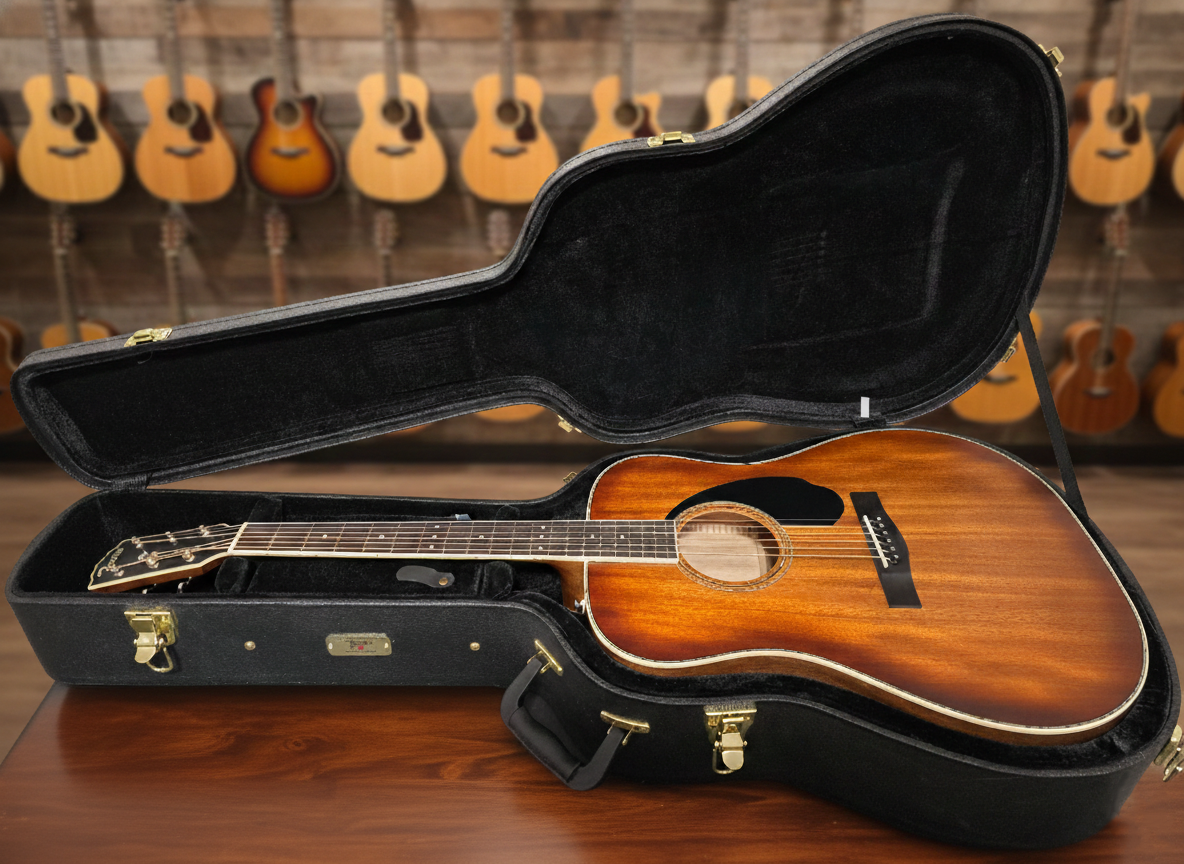
If you’re buying your first acoustic guitar, or maybe stepping up to your second, things get confusing fast. You get hit with body shapes, tonewoods, electronics, and massive price swings, usually with zero context. It’s hard to figure out what actually matters.
Let’s be clear. I’m not an acoustic guitar collector with a wall of boutique instruments. What I have done is make my share of buying mistakes, learned from them, and figured out what actually counts for everyday players. This guide is for anyone in the same spot I was in, whether you’re buying your first acoustic, your second, or the one you plan to keep for good.
Acoustic Guitar Body Shapes
Body shape affects comfort, volume, and feel more than many people expect. Different shapes get tied to certain playing styles, but in reality, most acoustic guitars can handle a wide range of music. A dreadnought is not only for strumming, and a smaller body is not only for fingerpicking. Think of these as tendencies, not hard rules.
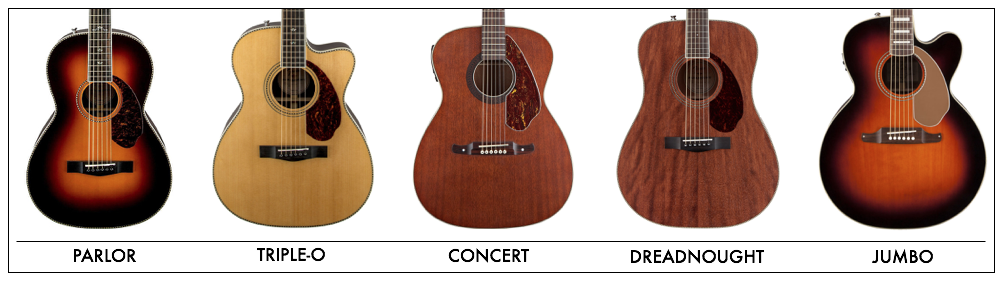
- Dreadnought: Big sound with strong bass and high volume. Popular for strumming, rock, and full chord work.
- Auditorium / Orchestra: The middle ground. Smaller than a dreadnought with a narrower waist, handling mixed playing styles really well.
- Concert: Smaller and more focused. Very comfortable to hold for long playing sessions or couch practice.
- Jumbo: Very loud and full-sounding, but physically large and not comfortable for everyone.
- Parlor and Travel: Smaller, more intimate bodies with shorter scale lengths. Great for songwriting, quiet playing, or travel.
The most important thing is how the guitar feels in your hands. If it’s uncomfortable, you aren’t going to pick it up and play it.
Cutaway vs Non-Cutaway
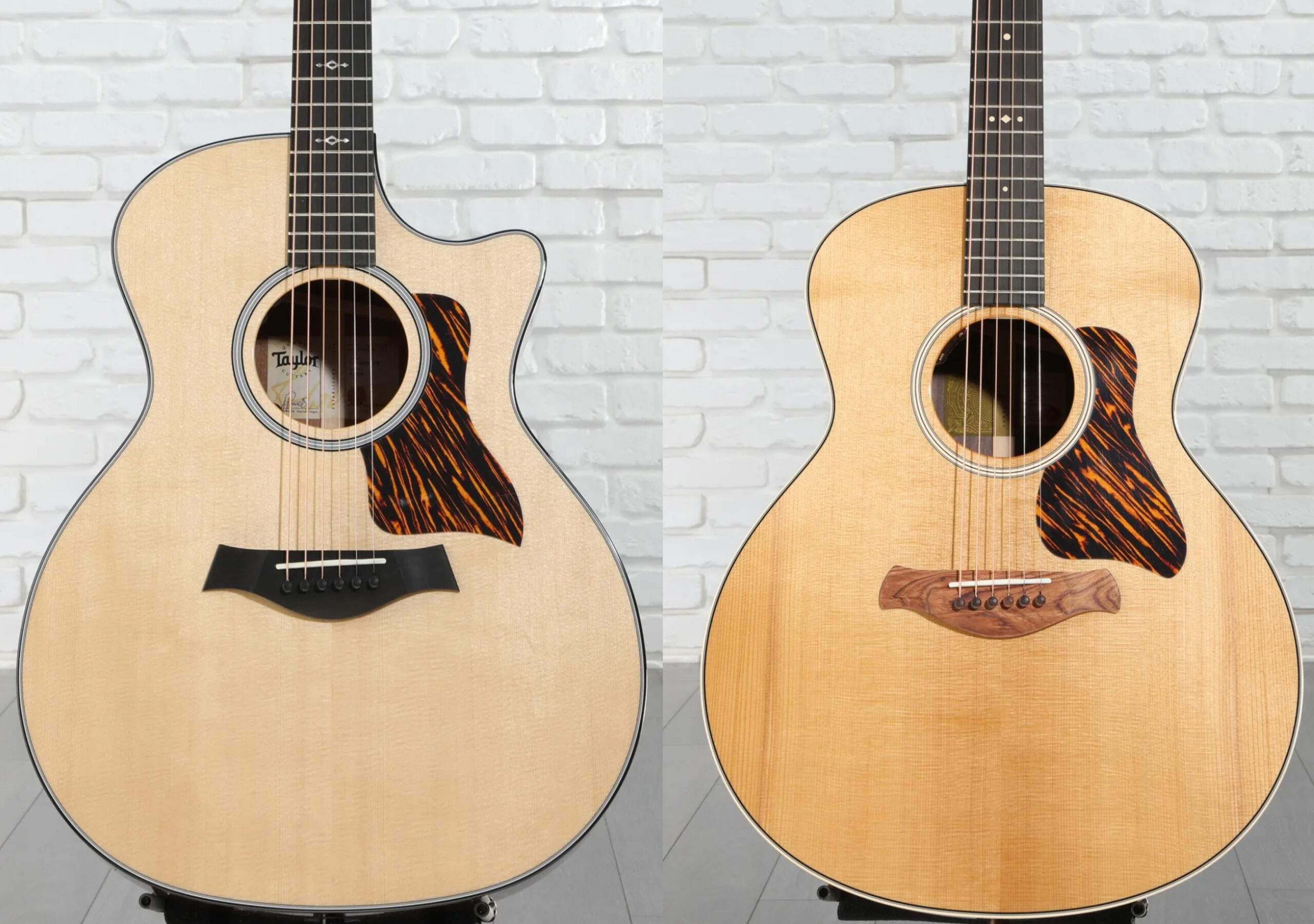
Some acoustic guitars have a cutaway, which is the scooped section near the neck that gives you easier access to the higher frets. That can be really helpful if you play leads or solos, or if you’re coming from an electric guitar background. Some players feel a cutaway takes away a little volume or bass, but in practice the difference is small and most people will never notice it. If you mostly stay in the lower frets, you may never miss having one.
Acoustic-Electric Guitars and Electronics
An acoustic-electric guitar is still a normal acoustic guitar first. It is designed to be played unplugged, and in everyday use it sounds essentially the same as one without electronics. The electronics do not change the acoustic sound or turn it into an electric guitar. They just give you the option to plug in when you need more volume for live playing, recording, or running through a PA.
Most acoustic-electric guitars start with an under-saddle pickup that captures string vibration. Even when you see a brand name like Fishman listed, this under-saddle pickup (called a piezo) is usually what is doing the heavy lifting. You don’t need to remember the name, just know that it is reliable, common, and handles stage volume well.
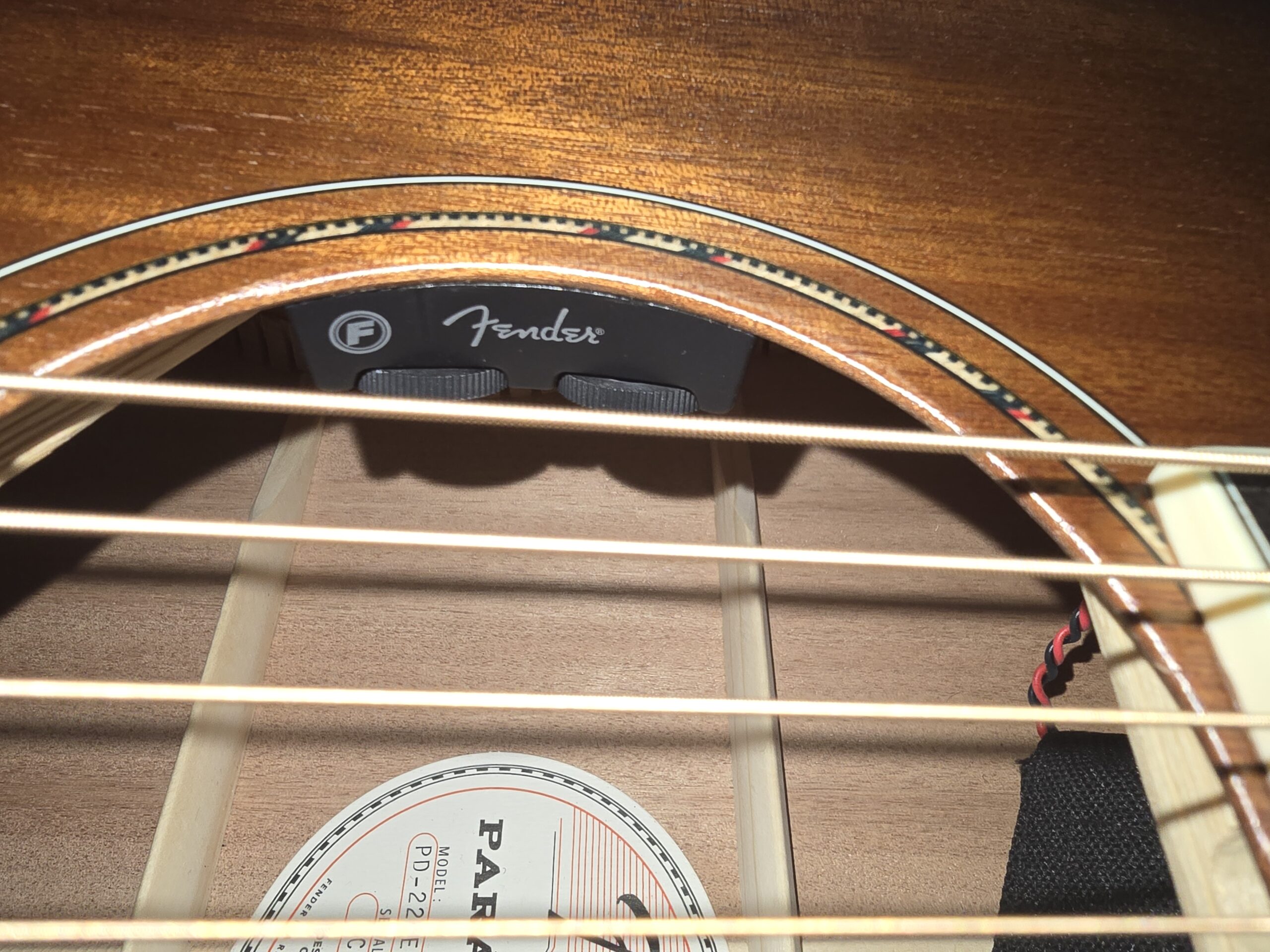
Some guitars stop there with just a volume or tone control. Others pair the piezo with a second sound source, like an internal microphone or a body sensor, and give you a blend control to mix the two. The Fender Paramount 220E series is a good example, using a volume knob and a blend knob to mix the under-saddle pickup with a body sensor. Yamaha’s Atmosfeel system on their Red Label guitars goes a step further by combining a piezo, a contact sensor, and an internal mic.
What a Blend Control Means
A blend knob lets you balance the two sound sources. The piezo side sounds clear, stable, and holds up against feedback on a loud stage. The mic or sensor side sounds more natural and airy, bringing out more of the guitar’s physical body resonance in quieter rooms or recording setups. Most players end up setting it somewhere in the middle.
If a guitar only has a volume control, that isn’t a downside. It just means the system is simpler and easier to use. And if you already own a purely acoustic guitar you love, you can always add an aftermarket pickup system later.
Wood Types and Tone
Tonewoods do affect how an acoustic sounds, but the differences are more subtle than people make them out to be, especially if you are buying your first acoustic guitar.
Common Top Woods
- Spruce: Clear, balanced, and versatile. This is the most common top wood and works well for strumming, flatpicking, and mixed styles.
- Mahogany: Warmer and more focused, often described as punchy or dry sounding.
- Cedar: Very responsive to a lighter touch. Popular with fingerstyle players who prefer a quicker, more sensitive response.
Common Back and Side Woods
- Mahogany: Warm and controlled midrange response.
- Rosewood: Deeper bass with more complex, ringing overtones.
- Sapele / Ovangkol: Popular alternatives chosen for balance, availability, and consistency (sapele gets compared to mahogany a lot).
- Maple / Walnut: Maple offers a bright, focused tone, while walnut sits in the middle with clean articulation.
Laminate vs All Solid Wood
This is one of the most misunderstood parts of buying an acoustic guitar, so it’s worth breaking down clearly. Laminate construction means the back and sides are made from thin layers of wood pressed together.
- The outer layer is a real wood veneer.
- The inner layers are chosen for strength and structural stability.
This makes the guitar more resistant to humidity changes, less likely to crack or warp, and cheaper to produce. Laminate guitars are not fake or bad. They are built with durability and consistency as the priority. (You’ll also see HPL, or High Pressure Laminate, on guitars like the Little Martin, which is about as tough and worry-free as it gets).
A lot of mid-range guitars use a solid top paired with layered back and sides. The top does most of the work in producing sound, so making it solid improves the tone noticeably, while layered back and sides help keep the cost down and the structure stable. Early on, this is usually the smartest compromise.
An all-solid wood acoustic uses single, solid pieces of wood for the top, back, and sides. Because each piece vibrates as a whole, the guitar resonates more freely and the tone tends to be richer. You’ll also hear players say solid wood guitars open up and sound better as they age.
Solid wood reacts to the air around it. When the air gets dry the wood shrinks, and when it gets humid the wood swells. A solid wood guitar left out in a dry room all winter can crack, which is an expensive repair. Laminate guitars are much more forgiving, which is a big reason they make sense for a first guitar or one that lives out on a stand.
If you buy a solid top or all-solid guitar, keep it in its case when you’re not playing, especially during dry winter months. A simple case humidifier goes a long way. If a guitar is getting too dry, the fret ends will usually start feeling sharp along the edges of the neck, and the strings may start to buzz. It isn’t hard to manage, it just needs to be part of the plan when you step up to solid wood.
You do not need an all-solid wood acoustic to be a real player. But if you know you are serious and want an instrument that grows with you, solid construction is one of the biggest things you pay for as prices go up.
Internal Bracing
Inside every acoustic is a system of wooden braces that support the top and shape how it vibrates. Lighter bracing often feels more responsive, while heavier bracing feels tighter but holds up better over time. You will hear marketing terms like scalloped, forward-shifted, or V-Class, but these are refinements. Most players notice the overall feel and sound of the guitar long before they care about the name of the bracing pattern
A Note on Brands and Identity
You will notice a lot of Yamaha guitars in the lower and mid price ranges. Yamaha makes very consistent instruments that punch above their price, which makes them easy to recommend for beginners or players stepping up. Over time, many players gravitate toward brands that match their style or the kind of music they play. That does not mean one brand is better than another. Priorities just change
A Personal Buying Mistake
I bought a Taylor 214e DLX early on because I trusted the brand name more than my own understanding at the time. The guitar played well, but it had more cosmetic wear than I should have accepted for the price. There were small nicks on the top and clear coat wear along the binding. Nothing structural, but enough that I should have negotiated harder. It also came with a softshell case that wasn’t great, and even after I cleaned it up, the padding damage was still there.
When I eventually sold it, I ended up with about $525 after shipping and fees. That stung, but it forced me to slow down and rethink what actually mattered to me. I ended up buying a Fender Paramount for less money, and it came with the original hardshell case. It was all solid wood, fit my style better, and made more sense for how I actually play.
The Taylor was not a bad guitar. I just paid too much because I went all in on the name before I understood construction, condition, and value.
Acoustic Guitar Recommendations by Price
These are not “best guitar ever” picks. They are well known options that make sense depending on where you are as a player, and the body shapes are listed to give you a general idea of size and feel, not to lock you into a playing style. Prices move around a lot, so treat these ranges as a guide. They are based on typical new prices as of October 2026, and used prices are often much lower.
$250–$500 Range
Great for first acoustics or stepping into acoustic guitar
Yamaha FG800 / FG830 (Dreadnought)
Top wood: Solid spruce
Back and sides: Layered nato or okoume (FG800), layered rosewood (FG830)
Construction: Solid top, layered back and sides
Type: Acoustic only
View current listings for: Yamaha FG800
View current listings for: Yamaha FG830
Yamaha FS800 (Concert)
Top wood: Solid spruce
Back and sides: Layered nato or okoume
Construction: Solid top, layered back and sides
Type: Acoustic only
View current listings for: FS800
Taylor GS Mini (Mini / Travel)
Top wood: Solid spruce or solid mahogany (model dependent)
Back and sides: Layered sapele
Construction: Solid top, layered back and sides
Type: Acoustic only (the GS Mini-e adds electronics)
View current listings for: Taylor GS Mini
Martin LX1 Little Martin (Travel / Mini)
Top wood: Spruce
Back and sides: Mahogany pattern HPL
Construction: Solid top, layered back and sides
Type: Acoustic only (the LX1E adds electronics)
View current listings for: Martin LX1 Little Martin
Epiphone Dove Studio (Dreadnought)
Top wood: Solid spruce
Back and sides: Layered maple
Construction: Solid top, layered back and sides
Type: Acoustic-electric
View current listings for: Epiphone Dove Studio
$500–$900 Range
Fender Paramount 220E Series (Dreadnought, Orchestra, or Parlor)
Top wood: Solid spruce or solid mahogany (model dependent)
Back and sides: Solid mahogany or solid rosewood (model dependent)
Construction: All solid wood
Type: Acoustic or acoustic-electric (model dependent)
View current listings for: Fender Paramount Series
Guild M-120 (Concert)
Top wood: Solid mahogany
Back and sides: Solid mahogany
Construction: All solid wood
Type: Acoustic only
View current listings for: Guild M-120
Epiphone J-45 (Slope-shoulder Dreadnought)
Top wood: Solid spruce
Back and sides: Solid mahogany
Construction: All solid wood
Type: Acoustic-electric
View current listings for: Epiphone J-45
Taylor 214ce (Grand Auditorium)
Top wood: Solid spruce
Back and sides: Layered rosewood
Construction: Solid top, layered back and sides
Type: Acoustic-electric
View current listings for: Taylor 214ce
Martin Road Series (Dreadnought or SC cutaway, model dependent)
Top wood: Solid spruce or solid sapele (model dependent)
Back and sides: Solid sapele or layered back and sides (model dependent)
Construction: Mixed, varies by model
Type: Acoustic-electric
View current listings for: Martin Road Series
Yamaha A1 Series (Cutaway dreadnought or cutaway concert)
Top wood: Solid spruce
Back and sides: Layered mahogany (A1M, AC1M) or layered rosewood (A1R, AC1R)
Construction: Solid top, layered back and sides
Type: Acoustic-electric
View current listings for: Yamaha A Series
$900–$1,500 Range
Long-term and forever guitars
Martin D-15M (Dreadnought)
Top wood: Solid mahogany
Back and sides: Solid mahogany
Construction: All solid wood
Type: Acoustic only
View current listings for: Martin D-15M
Guild D-20 (Dreadnought)
Top wood: Solid mahogany
Back and sides: Solid mahogany
Construction: All solid wood
Type: Acoustic only
View current listings for: Guild D-20
Gibson G-45 (Round shoulder dreadnought, J-45 body shape)
Top wood: Solid Sitka spruce
Back and sides: Solid walnut
Construction: All solid wood
Type: Acoustic only
View current listings for: Gibson G-45
Taylor 314ce (Grand Auditorium)
Top wood: Solid spruce
Back and sides: Solid sapele
Construction: All solid wood
Type: Acoustic-electric
View current listings for: Taylor 314ce
Yamaha Red Label FG5 / FGX5 (Dreadnought)
Top wood: Solid Sitka spruce
Back and sides: Solid mahogany
Construction: All solid wood
Type: FG5 is acoustic only, FGX5 is acoustic-electric
View current listings for: Yamaha Red Label FG5
Yamaha Red Label FS5 / FSX5 (Concert)
Top wood: Solid Sitka spruce
Back and sides: Solid mahogany
Construction: All solid wood
Type: Acoustic, Acoustic-electric
View current listings for: Yamaha Red Label FS5
View current listings for: Yamaha Red Label FSX5
If Money Isn’t an Object
Flagship acoustics people usually think of. These models are included as reference points, not as goals most players need to chase.
Martin D-28
The classic Martin sound. Big, balanced, and deeply tied to acoustic history.
View current listings for: Martin D-28
Gibson J-45 Standard
Warm, punchy, and instantly recognizable.
View current listings for: Gibson J-45 Standard
Taylor 814ce / 814e
Taylor’s modern flagship, focused on playability and refinement.
View current listings for: Taylor 814ce
View current listings for: Taylor 814e
Yamaha FG9
Yamaha’s no-compromise acoustic, built without value constraints.
View current listings for: Yamaha FG9
Guild D-55
Guild’s historic flagship with bold, traditional tone.
View current listings for: Guild D-55
Knowing what the top of the mountain looks like does not mean you need to climb it.
New vs Used
Buying used can unlock huge value. Prices are often far lower, but condition should be reflected in the price, and original cases matter more than people think.
What to Check on a Used Acoustic You don’t need to be a repair tech to spot obvious problems. Check these before handing over money:
- Cracks in the wood, especially near the soundhole and the edges of the pickguard.
- A lifting bridge. Try to slide a piece of paper under the back edge of the bridge. If it slides underneath, walk away or factor in a repair bill.
- A bulging top behind the bridge, which points to high tension or bad humidity storage.
- Action that is exceptionally high with no room left to lower the saddle, which indicates a costly neck reset.
- Worn frets with deep grooves under the strings in the first few positions.
- Working electronics. Plug it in, check every knob, and test with a fresh battery.
- The case. Make sure to ask if the original hardshell case is included.
If something looks off, you don’t always have to pass, but the price needs to reflect the needed repair.
Getting A Guitar You Want
You don’t need the most expensive acoustic, the biggest brand name, or a forever guitar right away. But understanding body shape, construction, setup, and value will help you avoid buying the same guitar twice.
No matter what wood or construction you go with, a lot of what makes an acoustic sound good is the player holding it. The right guitar helps, but it doesn’t replace time spent playing. If this guide helps even one person make a more confident decision, then it did its job.
Affiliate Disclosure
Some links in this article are affiliate links. If you choose to buy through them, I may earn a small commission at no extra cost to you. I only link to guitars I genuinely think are worth considering, and this helps support the site and future content.